
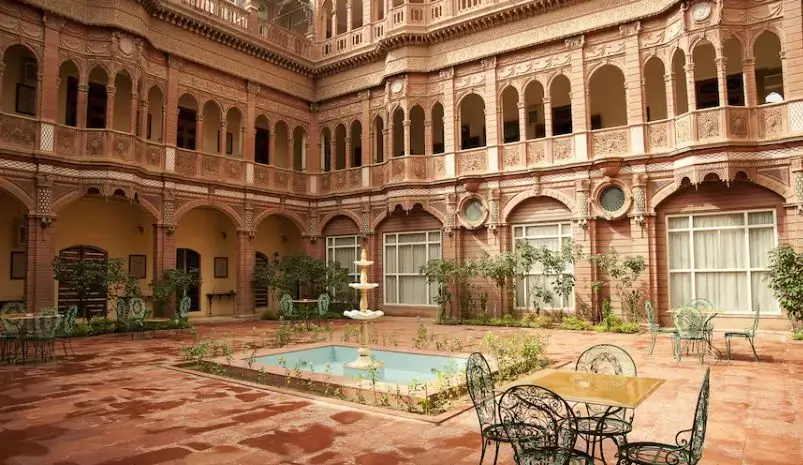
While Rajasthan is globally famous for grand forts and royal palaces, some of the state’s most extraordinary architectural treasures are hidden inside its old merchant neighborhoods. In Bikaner, these treasures appear in the form of magnificent havelis — richly decorated mansions built by wealthy merchant families who transformed desert wealth into artistic masterpieces of stone, wood, and painted craftsmanship.
Walking through the old streets of Bikaner feels like entering an open-air heritage museum. Narrow lanes suddenly reveal towering facades filled with carved balconies, ornate windows, lattice screens, painted walls, decorative gateways, and intricate red sandstone detailing unlike anything seen in modern Indian cities. These mansions were not simply homes. They represented status, prosperity, artistry, and the cultural identity of merchant families who once controlled major trade routes across Rajasthan and beyond.
Among all the heritage mansions in the city, the Rampuria Havelis remain the most famous. Their dramatic red sandstone facades and exceptional architectural detailing have made them symbols of Bikaner itself. Alongside Rampuria, several other havelis including Bhanwar Niwas, Kothari Haveli, and restored heritage properties continue preserving the elegance of old desert aristocratic life.
Unlike crowded palace complexes dominated by tourists, Bikaner’s haveli districts still feel deeply connected to local life. Residents continue living around these heritage structures while old markets, sweet shops, temples, and traditional businesses operate nearby. This balance between living culture and historical architecture creates a far more authentic experience for travelers interested in Rajasthan heritage beyond mainstream tourism.
Travelers exploring the city through a private Bikaner sightseeing taxi or a Rajasthan heritage architecture tour increasingly spend entire afternoons wandering through old haveli streets because the architectural beauty visible here rivals many of India’s more famous heritage destinations.
The word “haveli” refers to a traditional mansion or townhouse commonly built by wealthy merchant, royal, or noble families across Rajasthan and parts of northern India. However, in Rajasthan, havelis evolved far beyond simple residential structures and became symbols of wealth, artistic ambition, and cultural sophistication.
In desert cities like Bikaner, merchants earned enormous prosperity through trade routes connecting Rajasthan with Central Asia, Gujarat ports, Delhi, and western desert kingdoms. Successful trading families invested their wealth into elaborate homes designed not only for comfort but also to demonstrate social status and artistic taste.
As a result, Rajasthan havelis often featured multiple courtyards, private family sections, guest areas, carved balconies, fresco paintings, marble details, wooden doors, and highly decorated facades visible from the street.
The architecture also reflected desert climate needs. Thick sandstone walls helped regulate temperature, inner courtyards improved airflow, and intricately carved windows allowed ventilation while maintaining privacy for women inside the household.
In Bikaner specifically, the availability of high-quality red sandstone helped create a distinctive architectural style visible throughout the city’s haveli districts.
Today, these mansions serve as important historical records showing how merchant communities lived, displayed wealth, and influenced urban culture in Rajasthan’s desert cities.
Beyond every carved doorway lies a story of wealth, artistry, and royal elegance. Explore the timeless beauty of Rampuria Havelis and the regal charm of Bhanwar Niwas with a personalized heritage tour.
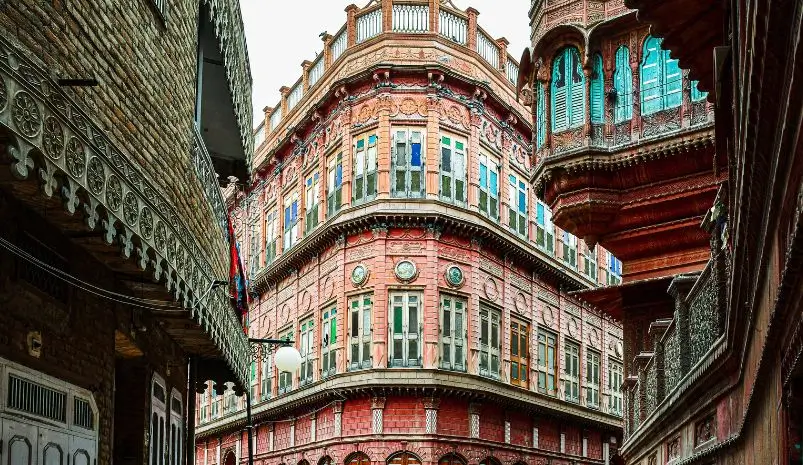
No discussion about Bikaner heritage architecture is complete without mentioning the extraordinary Rampuria Havelis. Often described as the pride of Bikaner, these interconnected merchant mansions represent some of the finest examples of haveli craftsmanship anywhere in Rajasthan.
Built primarily during the fifteenth and sixteenth centuries by wealthy Rampuria merchant families, the havelis dominate old city streets through their dramatic red sandstone facades filled with intricate carvings and decorative detailing.
The first thing travelers notice about Rampuria Havelis is the incredible density of architectural ornamentation. Every balcony, pillar, window frame, arch, and facade section contains elaborate stone carving work created by highly skilled artisans. Floral motifs, geometric patterns, lattice screens, and decorative arches combine together in astonishing complexity.
Unlike simpler merchant houses found in smaller towns, Rampuria Havelis demonstrate immense financial investment and artistic ambition. Historians often compare their craftsmanship with the famous havelis of Shekhawati because of the level of detail visible throughout the structures.
Walking through the narrow streets surrounding these mansions becomes one of the most memorable experiences in Bikaner. During early morning and sunset hours, warm desert sunlight reflects beautifully across the red sandstone surfaces, creating dramatic photographic scenes.
Several portions of the haveli complex remain privately owned, while others have undergone restoration or adaptive reuse projects connected to tourism and heritage preservation.
Architects and photographers frequently spend hours studying the balconies and facades because every angle reveals new details often missed during quick sightseeing visits.
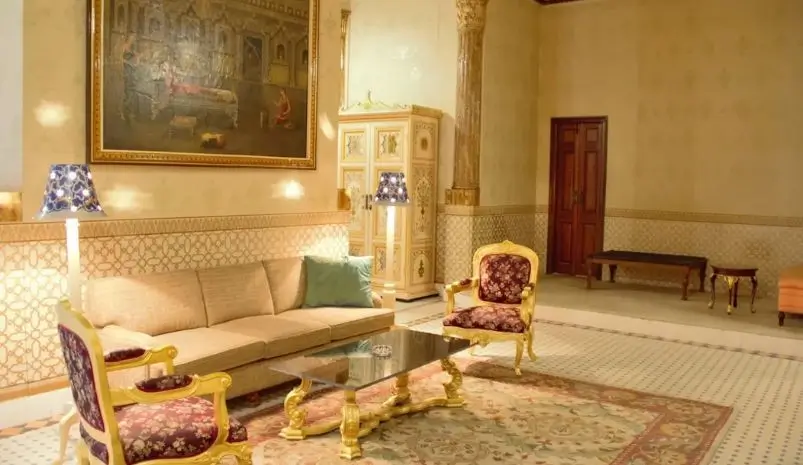
Among the most famous restored heritage mansions in Bikaner, Bhanwar Niwas Haveli offers travelers the opportunity to experience old Rajasthan aristocratic atmosphere in a more immersive way.
Originally built for a wealthy merchant family, the haveli later transformed into a heritage hotel while preserving much of its original architecture and decorative character. Unlike museums where visitors only observe history from outside, Bhanwar Niwas allows guests to experience the ambiance of traditional haveli living through restored rooms, courtyards, staircases, balconies, and antique interiors.
The haveli combines Rajput, Mughal, and colonial influences visible through carved facades, European-inspired furniture, stained glass details, painted ceilings, and ornamental courtyards.
The entrance area itself creates strong visual impact with decorative arches, chandeliers, antique objects, and intricate stone detailing introducing visitors to the luxury once associated with Bikaner merchant elites.
Many travelers staying here specifically seek slower heritage experiences beyond ordinary hotel accommodation. Evening dining inside courtyard areas accompanied by traditional Rajasthan hospitality creates especially memorable atmosphere for international tourists and cultural travelers.
Photographers also appreciate Bhanwar Niwas because the haveli’s interiors preserve authentic textures, lighting, and architectural layering difficult to find in modernized heritage properties.
Travelers booking a luxury Rajasthan heritage tour by private car frequently include overnight stays in restored havelis like Bhanwar Niwas to experience desert architecture more personally.
Several architectural characteristics distinguish Bikaner havelis from merchant mansions found in other Rajasthan cities.
The most obvious feature is the use of red sandstone, giving the buildings their warm desert appearance. Unlike the painted fresco-heavy style of Shekhawati havelis, Bikaner architecture emphasizes stone carving and sculptural detailing more heavily.
Jharokhas, or projecting balconies, remain among the most visually striking elements. These balconies allowed women inside the household to observe street activities while maintaining privacy according to traditional social customs.
Lattice screens known as jalis also appear extensively across facades and windows. Besides decorative beauty, these screens improved airflow and reduced harsh desert sunlight entering interior spaces.
Inner courtyards formed the heart of haveli design. These open spaces improved ventilation, provided family gathering areas, and created separation between public and private household sections.
Large wooden doors reinforced with metal details reflected both wealth and security concerns associated with merchant prosperity during earlier centuries.
Several havelis also contain painted interiors, mirror work, decorative ceilings, and imported materials demonstrating the global trade connections maintained by wealthy Bikaner merchants.
The layering of architectural influences across centuries makes these mansions especially fascinating because Rajput, Mughal, colonial, and local desert traditions all appear within the same structures.
Understanding the history of Bikaner merchant families helps explain why the city developed such extraordinary haveli architecture despite its harsh desert environment.
Bikaner became an important trading center because of its strategic location along caravan routes crossing western Rajasthan. Merchants dealing in textiles, spices, dry fruits, silver, opium, tea, and luxury goods accumulated enormous wealth through long-distance trade networks.
Families such as the Rampurias, Kotharis, and other trading communities invested heavily in residential architecture as symbols of prosperity and social standing.
Competition among merchant families also encouraged increasingly elaborate architectural designs. Wealthy families wanted their mansions to demonstrate not only financial success but also artistic refinement and cultural sophistication.
Many merchant households supported temples, schools, public works, and charitable activities alongside their architectural projects, helping shape Bikaner’s broader urban identity.
Even today, descendants of some old merchant families remain connected to the city, though many historic havelis now require preservation support because maintaining such large heritage structures is expensive and complex.
Travelers wanting to explore Bikaner haveli architecture should spend time walking through the old city areas rather than limiting themselves only to major tourist monuments.
Rampuria Street remains the most important heritage lane where the famous red sandstone mansions stand closely together.
The surrounding old market neighborhoods also contain smaller but highly detailed havelis hidden between shops, temples, and residential buildings.
Kote Gate area provides access to several old merchant districts where travelers can combine haveli exploration with local shopping and street food experiences.
Early morning remains ideal for photography because streets remain quieter and sunlight falls beautifully across sandstone facades.
Evening walks also become enjoyable because old city markets become lively while heritage structures glow under softer desert lighting.
Travelers interested in deeper architectural understanding sometimes hire local heritage guides who explain symbolism, family history, and artistic details often overlooked during casual visits.
Booking a private Bikaner heritage sightseeing taxi allows visitors to comfortably move between old city areas, Junagarh Fort, temples, and market districts without transportation difficulties.
Once home to Bikaner's wealthiest merchant families, these magnificent havelis continue to captivate visitors with their timeless charm. Walk through living history and discover the grandeur that still defines Rajasthan's royal heritage.
Understanding the history of Bikaner merchant families helps explain why the city developed such extraordinary haveli architecture despite its harsh desert environment.
Bikaner became an important trading center because of its strategic location along caravan routes crossing western Rajasthan. Merchants dealing in textiles, spices, dry fruits, silver, opium, tea, and luxury goods accumulated enormous wealth through long-distance trade networks.
Families such as the Rampurias, Kotharis, and other trading communities invested heavily in residential architecture as symbols of prosperity and social standing.
Competition among merchant families also encouraged increasingly elaborate architectural designs. Wealthy families wanted their mansions to demonstrate not only financial success but also artistic refinement and cultural sophistication.
Many merchant households supported temples, schools, public works, and charitable activities alongside their architectural projects, helping shape Bikaner’s broader urban identity.
Even today, descendants of some old merchant families remain connected to the city, though many historic havelis now require preservation support because maintaining such large heritage structures is expensive and complex.
Travelers wanting to explore Bikaner haveli architecture should spend time walking through the old city areas rather than limiting themselves only to major tourist monuments.
Rampuria Street remains the most important heritage lane where the famous red sandstone mansions stand closely together.
The surrounding old market neighborhoods also contain smaller but highly detailed havelis hidden between shops, temples, and residential buildings.
Kote Gate area provides access to several old merchant districts where travelers can combine haveli exploration with local shopping and street food experiences.
Early morning remains ideal for photography because streets remain quieter and sunlight falls beautifully across sandstone facades.
Evening walks also become enjoyable because old city markets become lively while heritage structures glow under softer desert lighting.
Travelers interested in deeper architectural understanding sometimes hire local heritage guides who explain symbolism, family history, and artistic details often overlooked during casual visits.
Booking a private Bikaner heritage sightseeing taxi allows visitors to comfortably move between old city areas, Junagarh Fort, temples, and market districts without transportation difficulties.
Despite their beauty, many historic havelis in Bikaner face preservation challenges connected to aging structures, environmental damage, and urban development pressures.
Desert climate conditions gradually affect sandstone surfaces while maintaining large heritage mansions requires substantial financial investment.
Some havelis remain abandoned or partially damaged because original merchant families relocated to larger cities generations ago.
At the same time, heritage tourism has increased awareness regarding preservation importance. Several mansions have undergone restoration projects and adaptive reuse as heritage hotels, museums, cafes, or cultural spaces.
Conservation experts continue emphasizing the importance of protecting Bikaner’s architectural identity because these havelis represent irreplaceable examples of Rajasthan desert urban culture.
Travelers exploring Bikaner havelis should wear comfortable walking shoes because old city lanes involve uneven surfaces and narrow pathways.
Photography lovers should ideally visit during morning or sunset hours for the best lighting conditions on sandstone facades.
Respectful behavior remains important because several heritage buildings continue functioning as private residences or active businesses.
Travelers interested in architecture should avoid rushing through the area because many details become visible only through slow observation.
Combining haveli exploration with local food stops and market walks creates a more complete understanding of old Bikaner culture.
Hiring a private Rajasthan heritage tour cab allows visitors to comfortably combine havelis, Junagarh Fort, camel research farm, temples, and old bazaars within a flexible sightseeing schedule.
Our travel Faqs is your ultimate guide to exploring the top destinations in Rajasthan. From insider tips to comprehensive guides, we have everything you need to plan your trip with ease and convenience.
Rampuria Havelis and Bhanwar Niwas Haveli are among the city’s most famous heritage mansions.
They are famous for extraordinary red sandstone carvings and intricate merchant architecture.
It combines restored heritage architecture with luxury haveli hotel experiences.
Most famous havelis were constructed using red sandstone.
Yes, some restored havelis now operate as heritage hotels.
Winter months and early morning hours provide the best conditions for walking and photography.
Both are famous heritage mansions, though Bikaner emphasizes sandstone carving more heavily.
Most travelers spend two to four hours exploring old city haveli districts comfortably.
Yes, several local guides and tour operators organize heritage architecture walks.
Many travelers prefer booking a private Bikaner sightseeing taxi or a Rajasthan heritage tour car for convenient transportation between old city areas, forts, and architectural landmarks.