
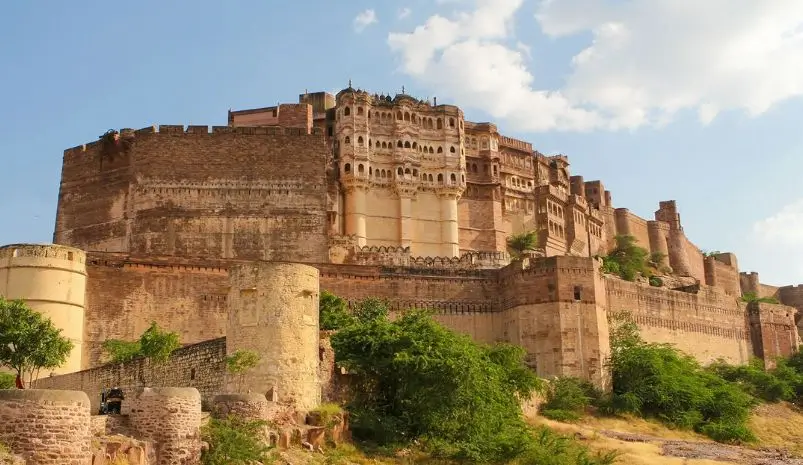
Few monuments in Rajasthan leave a lasting impression before visitors even enter the main gate. Mehrangarh Fort rises dramatically above Jodhpur on a rocky hill, its towering sandstone walls visible from almost every part of the city. From a distance, the fort appears almost inseparable from the landscape, while the blue-painted houses below create one of India's most recognisable city views.
For many travellers, the fort is the highlight of a Jodhpur sightseeing tour. It is not simply because of its size, but because every section inside tells a different story. Massive gateways still carry marks from historic battles, elegant palaces display remarkable craftsmanship, museum galleries preserve royal collections, and quiet terraces offer spectacular views across the Blue City.
Some visitors spend only an hour inside before moving on to Jaswant Thada or Umaid Bhawan Palace. That short visit covers the main courtyards but misses many interesting corners hidden beyond the busiest paths. Small balconies overlooking the old city, peaceful palace windows, ancient cannon positions and less crowded galleries often become the most memorable parts of the visit.
Whether you enjoy architecture, photography, royal history or simply wish to admire one of Rajasthan's finest landmarks, Mehrangarh Fort Jodhpur deserves enough time to be explored at a relaxed pace. Arriving early in the morning or later in the afternoon usually provides pleasant weather, softer light for photography and a more comfortable experience during most months of the year.
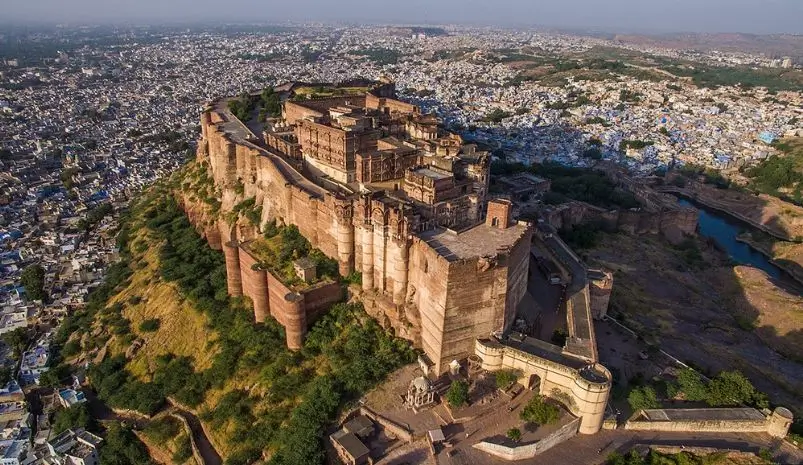
Standing around 125 metres above the city, Mehrangarh Fort dominates the skyline in a way that very few Indian forts can match. Its location was carefully chosen to provide security for the rulers of Marwar, while also allowing complete views of the surrounding region. Even today, standing on one of the fort's terraces makes it easy to understand why this hill became the ideal place for building a royal stronghold.
Unlike several historical forts where only defensive walls remain, Mehrangarh combines military architecture with magnificent royal residences. Thick stone ramparts, giant wooden gates reinforced with iron spikes and old cannon positions remind visitors that this was once one of the strongest forts in western India. Only a short walk away, beautifully decorated palace rooms reveal a completely different world filled with colourful stained glass, carved sandstone screens, polished courtyards and finely painted ceilings.
The museum inside the fort is another major attraction. Instead of displaying a few isolated artefacts, the galleries present a well-organised collection of royal objects that belonged to the Rathore dynasty. Visitors can see decorated palanquins, ceremonial cradles, weapons, costumes, miniature paintings and furniture that once formed part of royal life. Every gallery explains how the rulers of Marwar lived, celebrated festivals, received guests and governed their kingdom.
Photography is another reason many travellers consider the fort one of the finest places in Rajasthan. Looking down from the walls, thousands of blue houses spread across old Jodhpur, creating the famous Blue City view seen in travel magazines around the world. Early morning light produces clear photographs, while sunset adds warm golden colours across the sandstone walls.
Modern visitor facilities also make the experience comfortable. The fort has organised ticket counters, clean restrooms, cafés, souvenir shops and an elevator that helps senior travellers reach the upper level without climbing the entire route. These facilities allow families and international visitors to spend several enjoyable hours inside the complex.
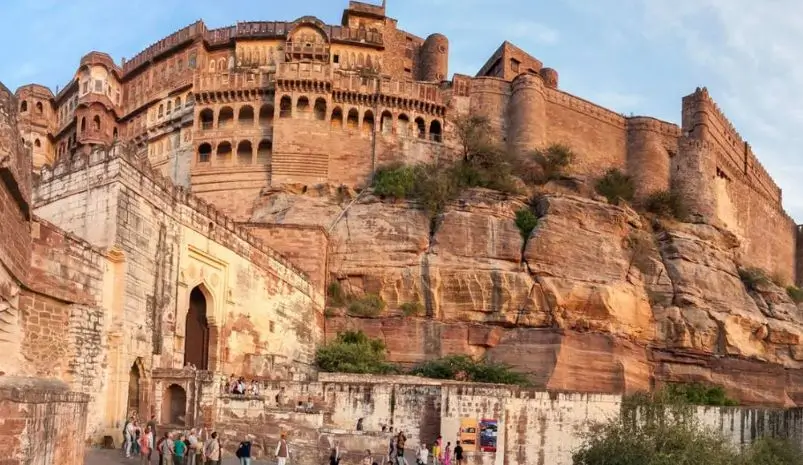
The history of Mehrangarh Fort began when Rao Jodha decided to establish a new capital for the Kingdom of Marwar. The earlier capital at Mandore had become increasingly difficult to defend, leading him to select a rocky hill that offered a far stronger natural position. Construction of the fort started during the fifteenth century, laying the foundation for what would eventually become one of Rajasthan's greatest royal landmarks.
Rather than being completed in a single period, the fort developed gradually over many generations. Every ruler contributed something new, adding gates, courtyards, temples, audience halls and magnificent palaces. Because of this continuous expansion, the architecture represents several periods of Rajput history while maintaining a remarkably consistent appearance.
The massive entrance gates were designed to slow invading armies. Some still display marks connected with historical conflicts that shaped the destiny of Marwar. Thick walls, steep approaches and carefully planned defensive positions made direct attacks extremely difficult. These military features explain why Mehrangarh earned a reputation as one of India's strongest hill forts.
While defence remained important, the rulers also transformed the interior into an elegant royal residence. Palaces such as Moti Mahal, Phool Mahal and Sheesh Mahal became centres for royal ceremonies, diplomatic meetings and cultural performances. Skilled craftsmen decorated the rooms with carved stone, coloured glass, mirror work and painted ceilings that continue to impress visitors centuries later.
The fort also reflects the cultural traditions of Jodhpur. Temples inside the complex remain places of worship, while local stories associated with the foundation of the fort are still shared by guides. These traditions connect the monument with the people of Marwar rather than presenting it only as an archaeological site.
Today, conservation efforts ensure that visitors can appreciate both the military engineering and artistic heritage preserved within the fort. Walking through its gateways offers an opportunity to understand how Rajasthan's rulers balanced security, administration and royal life in one extraordinary complex.
Walk through the magnificent gates of Mehrangarh and discover a world shaped by Rajput history, royal traditions, remarkable architecture, and centuries-old craftsmanship.
Before visiting Mehrangarh Fort, it is useful to know the latest visitor information so that enough time can be planned for the experience.
|
Information |
Details |
|---|---|
|
Opening Time |
9:00 AM |
|
Closing Time |
5:00 PM |
|
Average Visit Duration |
2.5 to 4 Hours |
|
Best Visiting Time |
9:00 AM to 11:00 AM or after 3:00 PM |
|
Weekly Closing |
Open all seven days |
Entry Fee
Ticket prices may change occasionally after updates by the fort management. Visitors should always confirm the latest rates at the official ticket counter before entering.
Typical ticket categories include:
Audio guides are available in multiple international languages for visitors who prefer a self-guided experience. These guides explain the history of important palaces and museum galleries while allowing visitors to move at their own pace.
The most comfortable months for visiting Mehrangarh Fort Jodhpur are generally from October until March when daytime temperatures are pleasant for walking through the large complex.
During summer, afternoon temperatures become extremely high. If visiting between April and June, reaching the fort immediately after opening time provides a much better experience than visiting around midday.
Monsoon months occasionally bring dramatic clouds over Jodhpur, creating beautiful photography opportunities while reducing daytime heat.
How Much Time Should You Spend?
Travellers interested only in the main highlights usually spend around two hours.
Visitors who wish to enjoy the museum, palace interiors, photography points, cafés and quieter sections should allow at least three to four hours.
Walking through Mehrangarh Fort is very different from visiting a monument that consists of only open courtyards and stone walls. Behind the massive defensive structure lies a collection of beautifully preserved royal palaces where each room reflects a different period of Marwar's history. The architecture changes gradually as visitors move through the complex, allowing them to notice how different rulers added their own artistic style while maintaining the overall character of the fort.
One of the finest sections is Moti Mahal, also known as the Pearl Palace. Large stained-glass windows allow colourful light to enter the royal audience hall, while the decorated ceilings display remarkable craftsmanship that has survived for centuries. This hall was used for important meetings with nobles and members of the royal court. Looking closely at the walls, visitors can still notice decorative details that were created entirely by hand.
Another impressive palace is Phool Mahal, regarded as one of the most luxurious rooms inside the fort. Delicate gold decorations, painted ceilings and elegant interiors reflect the lifestyle enjoyed by the Rathore rulers during peaceful times. The room hosted music performances, celebrations and royal gatherings, making it one of the cultural centres of the palace complex.
Sheesh Mahal, decorated with mirror work and intricate designs, offers another completely different atmosphere. Although smaller than some of the other halls, its artistic details attract visitors who appreciate traditional Rajasthani craftsmanship. Nearby galleries display carved sandstone windows that provided privacy for royal women while allowing them to observe ceremonies taking place in the courtyards below.
The museum itself deserves much more attention than many travellers give it. Instead of quickly walking through the galleries, spending time reading the displays creates a much deeper understanding of Marwar's royal heritage. The collection includes ceremonial swords, shields, armour, royal costumes, miniature paintings, decorated cradles, furniture and beautifully designed palanquins that were once used by members of the royal family.
One gallery displays a remarkable collection of royal palanquins, each reflecting different ceremonial purposes. Their detailed carvings and decorative finishes demonstrate the high level of craftsmanship achieved by local artisans. Another gallery contains historic weapons, showing how warfare evolved during different periods of Rajasthan's history. Visitors interested in military architecture often find these exhibits especially fascinating because they complement the defensive design seen throughout the fort.
Photography inside some museum sections may be restricted, so visitors should always follow the instructions displayed near gallery entrances. Respecting these guidelines helps preserve delicate artefacts for future generations while ensuring a pleasant experience for everyone.
Taking time to appreciate both the palace interiors and museum collections transforms a simple sightseeing visit into a deeper understanding of Rajasthan's royal traditions, artistic achievements and cultural identity.
Although the main courtyards receive most of the attention, several quieter areas inside Mehrangarh Fort Jodhpur are equally rewarding. Visitors who slow down instead of rushing from one attraction to another often discover peaceful viewpoints, architectural details and less crowded spaces that reveal another side of the fort.
Several balconies overlooking the Blue City remain surprisingly quiet even during busy tourist seasons. These viewing platforms provide uninterrupted panoramas without the larger crowds gathering near the main terraces. Early morning offers the clearest visibility, while late afternoon creates warm lighting that highlights both the sandstone walls and the blue houses spread across old Jodhpur.
Ancient cannon positions along sections of the fort wall are another interesting stop. These defensive platforms illustrate how the fort protected the Kingdom of Marwar from approaching armies. Standing beside the old cannons also provides a better understanding of the strategic importance of the hill on which the fort was constructed.
Many visitors walk quickly through the connecting corridors between palace sections without noticing the carved sandstone screens and beautifully designed windows. These architectural details demonstrate the exceptional skills of local craftsmen, who created elegant patterns while ensuring proper ventilation inside the royal residence. Looking carefully at these carvings often reveals differences in design from one palace to another.
Small temple areas within the fort are frequently overlooked because they lie slightly away from the busiest visitor routes. These temples continue to hold religious importance and offer a calm atmosphere compared with the more crowded museum galleries. Visitors should dress respectfully and avoid unnecessary noise while passing through these sacred spaces.
One of the simplest yet most enjoyable experiences is sitting quietly in one of the shaded courtyards for a few minutes. Watching the changing colours of the sandstone, listening to traditional music occasionally performed inside the complex and observing everyday visitor activity creates a much richer memory than simply photographing every building before moving on.
Travellers interested in architecture should also pay attention to the gateways connecting different sections of the fort. Each gate was constructed during a different period and carries its own historical significance. Decorative carvings, defensive features and inscriptions reveal how the fort gradually expanded over several centuries.
These quieter locations rarely appear in short itineraries, yet they often become the favourite memories for visitors who allow themselves enough time inside the complex.
Reaching Mehrangarh Fort is straightforward because it lies only a short distance from the centre of Jodhpur. The fort is well connected by road, railway and air, making it convenient for both domestic and international travellers.
Visitors arriving by air can reach the fort from Jodhpur Airport in approximately 20 to 30 minutes, depending on traffic conditions. Taxis are available outside the airport, while travellers booking a private vehicle with Rajasthan Tour Taxi can travel directly to the fort without arranging separate transportation.
Those arriving by train will find Jodhpur Junction Railway Station around 6 kilometres from the fort. The journey usually takes 15 to 25 minutes by taxi or private car. Auto-rickshaws are also available, although a private vehicle provides greater comfort, particularly for families carrying luggage.
Travellers driving from nearby cities can comfortably include Mehrangarh Fort within a broader Rajasthan itinerary.
Approximate Road Distances
|
Starting Point |
Distance |
|---|---|
|
Jaipur |
Around 350 km |
|
Udaipur |
Around 250 km |
|
Jaisalmer |
Around 280 km |
|
Bikaner |
Around 250 km |
|
Mount Abu |
Around 270 km |
Parking facilities are available near the entrance area, although arriving early during weekends and holiday periods generally makes parking easier.
Many visitors combine the fort with nearby attractions on the same day, including Jaswant Thada, Umaid Bhawan Palace, Clock Tower Market and the old blue streets of Jodhpur. Travelling by private chauffeur-driven vehicle allows a flexible schedule without depending on local transport or fixed tour timings.
For photographers, arriving soon after the fort opens provides cleaner views, comfortable walking conditions and softer natural light before the afternoon crowds begin to increase.
A visit to Mehrangarh Fort can easily become part of a full day of Jodhpur sightseeing because several important attractions are located within a short driving distance. Instead of rushing back to the hotel immediately after leaving the fort, many travellers continue exploring the city's royal heritage, local markets and peaceful gardens.
Jaswant Thada is the closest attraction and can be reached within a few minutes from the fort entrance. Built from finely carved white marble, this royal cenotaph offers a completely different atmosphere. The peaceful gardens, reflective lake and detailed marble work provide a pleasant contrast to the massive sandstone walls of Mehrangarh. Early morning and late afternoon are ideal times for photography here.
Another important landmark is Umaid Bhawan Palace, one of the world's largest private residences. Part of the palace continues to serve as the residence of the royal family, while another section houses a museum displaying vintage clocks, classic cars, photographs and royal memorabilia. The architecture combines Indian and European influences, making it one of the most distinctive buildings in Rajasthan.
Travellers interested in local culture often continue towards Clock Tower Market and Sardar Market. These traditional shopping areas are known for handicrafts, spices, textiles, leather products and souvenirs. Walking through the busy streets also provides an opportunity to experience everyday life in old Jodhpur beyond the city's historic monuments.
Those who enjoy photography frequently spend time wandering through the narrow blue lanes surrounding the old city. While many visitors admire the Blue City from inside the fort, walking through these neighbourhoods offers a completely different perspective. Small temples, traditional houses and colourful doorways make every street visually interesting.
If time allows, Mandore Gardens is another worthwhile stop located on the outskirts of the city. Historic cenotaphs, landscaped gardens and temple structures make it an enjoyable destination for visitors looking to spend a quieter afternoon away from the city centre.
Combining these attractions with Mehrangarh Fort creates a well-balanced day covering royal history, architecture, local culture and photography without requiring long travel distances.
Mehrangarh Fort is more than a magnificent monument—it is a journey through the royal history, artistry, and traditions of Marwar.
A little preparation makes visiting Mehrangarh Fort Jodhpur far more comfortable, especially for first-time travellers. Since the fort covers a large area with several palace sections, museum galleries and viewpoints, comfortable walking shoes are highly recommended. Stone pathways and steps can become slippery after rainfall, so footwear with a good grip is useful throughout the year.
Although the fort has an elevator connecting lower and upper levels, visitors should still expect a moderate amount of walking. Carrying a bottle of water is advisable, particularly during warmer months. Drinking water and refreshments are available inside the complex, but staying hydrated before beginning the visit makes exploring easier.
Lightweight clothing is suitable for most of the year, while a hat, sunglasses and sunscreen help protect against the strong Rajasthan sun. During winter mornings, carrying a light jacket may be comfortable because temperatures can remain cool until mid-morning.
Photography is permitted in many outdoor areas, making the fort an excellent destination for photographers. A wide-angle lens works particularly well for capturing palace courtyards and panoramic views of the Blue City. Visitors using drones should remember that flying drones around historical monuments generally requires official permission and may be prohibited.
Respecting museum rules is equally important. Certain galleries restrict flash photography or photography altogether in order to protect valuable artefacts. Following staff instructions ensures the preservation of these historic collections.
Visitors travelling with children will find the fort educational as well as enjoyable. Museum displays, palace architecture and open courtyards provide opportunities to learn about Rajasthan's royal history in an engaging environment.
Hiring an official guide or using the available audio guide can greatly improve the visit. Many architectural details and historical stories become much more meaningful when explained with proper context rather than simply viewed without background information.
For travellers covering multiple destinations across Rajasthan, visiting Mehrangarh Fort as part of a chauffeur-driven itinerary offers the greatest flexibility. There is no need to worry about parking, navigation or local transport schedules, allowing more time to enjoy the monument itself.
Many international visitors include Jodhpur as part of a longer journey covering Jaipur, Udaipur, Jaisalmer, Pushkar or Mount Abu. Instead of arranging separate taxis in every city, travelling with Rajasthan Tour Taxi allows the entire itinerary to be managed with one comfortable private vehicle and an experienced chauffeur.
Mr. Shakeer and his team provide private sightseeing tours, airport transfers and multi-day Rajasthan tours designed around each traveller's schedule. Whether you wish to spend extra time inside Mehrangarh Fort, stop for photography along the route or combine several attractions in a single day, a private vehicle gives complete flexibility without the pressure of fixed group tour timings.
This style of travel is especially suitable for couples, families, senior travellers and international guests who prefer comfortable transportation, local knowledge and personalised service throughout their Rajasthan journey.
Our travel Faqs is your ultimate guide to exploring the top destinations in Rajasthan. From insider tips to comprehensive guides, we have everything you need to plan your trip with ease and convenience.
Yes. Mehrangarh Fort is considered one of Rajasthan's finest historical monuments because of its well-preserved palaces, museum collections, panoramic city views and remarkable architecture.
Most visitors spend between two and four hours depending on whether they visit only the main highlights or also explore the museum and quieter viewpoints.
The fort is generally open daily from 9:00 AM to 5:00 PM. Visitors should confirm timings before travelling, as special events or maintenance may occasionally affect operating hours.
Ticket prices vary for Indian and international visitors and may change periodically. The latest rates are available at the official ticket counter.
Photography is allowed in most outdoor areas. Some museum galleries may have restrictions, so visitors should follow the displayed guidelines.
Yes. Parking facilities are available near the entrance, although arriving early usually makes parking easier during busy travel periods.
Yes. The availability of an elevator and organised visitor facilities makes the fort more accessible than many other historic monuments in Rajasthan.
Jaswant Thada, Umaid Bhawan Palace, Clock Tower Market and the Blue City streets are all located within a short distance.
The most pleasant weather is generally experienced between October and March, although the fort remains open throughout the year.
Many travellers visit the fort as part of a private itinerary covering Jodhpur along with Jaipur, Udaipur, Jaisalmer and other destinations. Booking a private vehicle with Rajasthan Tour Taxi allows a flexible schedule and comfortable travel throughout the journey.