
Rajasthan is widely celebrated for its magnificent forts, royal palaces and colourful desert landscapes, but another fascinating aspect of the state often remains overlooked by international travellers—its deep connection with Vedic astronomy, traditional astrology, sacred temples and centuries-old spiritual knowledge. Long before modern telescopes and satellite technology, Indian scholars carefully observed the movements of the Sun, Moon and planets to create remarkably accurate astronomical calculations. Rajasthan preserves several places where visitors can still experience this remarkable scientific and spiritual heritage.
Among these sites, Jantar Mantar in Jaipur stands as one of the world's greatest historical observatories. Built during the eighteenth century, its enormous stone instruments were designed to calculate time, planetary positions, eclipses and celestial movements with astonishing precision. Today it is recognised as a UNESCO World Heritage Site and continues to attract historians, astronomers, architects and travellers interested in India's scientific achievements.
Beyond Jaipur, Rajasthan also offers sacred destinations associated with astrology, planetary worship and Vedic traditions. The ancient Osian Temples, located near Jodhpur, have been important pilgrimage centres for centuries. Dedicated primarily to Hindu and Jain deities, these beautifully carved sandstone temples continue to host religious ceremonies where many devotees seek blessings before beginning important stages of life, including marriages, new businesses and long journeys.
For visitors interested in India's traditional belief systems, an Astrology Tour of Rajasthan is not limited to horoscope readings. Instead, it combines architecture, astronomy, temple culture, mythology, philosophy and local customs into a fascinating cultural experience. Travellers learn how ancient scholars measured celestial movements, how temples were aligned according to astronomical principles, and how astrology became closely connected with festivals, agriculture, architecture and daily life.
Unlike purely religious pilgrimages, these journeys appeal to a wide variety of visitors. Historians appreciate the engineering behind monumental observatories, photographers enjoy the striking geometry of astronomical instruments, while cultural travellers gain insight into one of the world's oldest continuous knowledge traditions. Even visitors who do not personally believe in astrology often find these sites fascinating because they reveal how science, mathematics, religion and architecture developed together in medieval India.
Many Luxury Rajasthan Tours and Private Rajasthan Tour Packages now include these destinations alongside famous heritage attractions such as Amber Fort, Mehrangarh Fort, Udaipur City Palace and Jaisalmer Fort. This combination allows travellers to experience Rajasthan's royal history while also discovering its lesser-known intellectual and spiritual heritage.
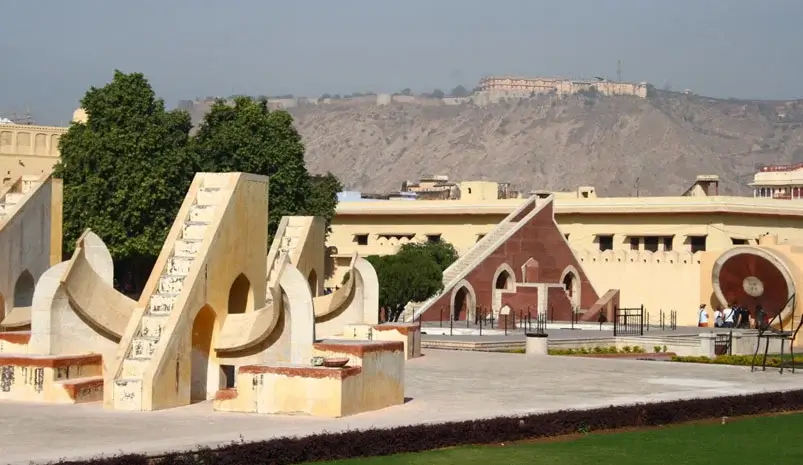
Located beside the City Palace in Jaipur, Jantar Mantar is undoubtedly the centrepiece of any Rajasthan astrology and astronomy itinerary. Commissioned by Maharaja Sawai Jai Singh II, the observatory was designed not as a decorative monument but as a fully functioning scientific institution. The Maharaja was deeply interested in astronomy and sought greater accuracy than the metal instruments available during his time. Instead of building smaller devices, he commissioned enormous masonry instruments capable of producing remarkably precise observations.
Today the observatory contains 19 major astronomical instruments, each designed for a specific purpose. Some calculate local time using the position of the Sun, while others determine the altitude of celestial bodies, measure planetary positions, identify zodiac constellations and predict astronomical events. The most famous instrument, the Samrat Yantra, is one of the world's largest sundials and can measure time with extraordinary accuracy under favourable conditions.
Walking through Jantar Mantar feels unlike visiting a traditional museum. Massive geometric structures rise dramatically against the Jaipur skyline, creating an environment where mathematics becomes architecture. Curved walls, triangular towers, circular platforms and carefully aligned stone surfaces demonstrate an exceptional understanding of geometry, engineering and celestial observation. Every instrument serves a scientific purpose, and many continue to function today exactly as they did centuries ago.
For international visitors, guided tours greatly enhance the experience. Professional guides explain how each instrument operates, demonstrate how shadows indicate time, describe the significance of planetary calculations and introduce the astronomical principles behind Vedic calendars. Visitors often discover that these monumental structures represent scientific innovation rather than religious symbolism alone.
The observatory is especially attractive for photographers because of its striking symmetry and bold architectural forms. Early morning provides pleasant weather and softer lighting, while the clear blue skies of Rajasthan create excellent contrast against the pale yellow stone structures.
Opening Hours
Approximate Entry Fee
Separate charges may apply for professional photography or commercial filming.
Allow approximately 1.5 to 2 hours to explore the observatory comfortably.
Since the observatory has open courtyards with limited shade, visitors should carry drinking water, wear a hat and apply sunscreen, particularly during warmer months.
Explore Jantar Mantar, ancient Osian temples and Rajasthan's fascinating Vedic and astronomical heritage with a thoughtfully planned private tour.
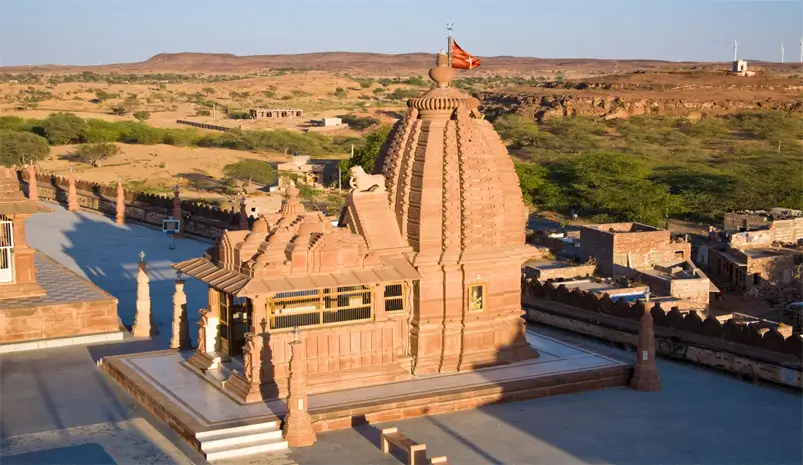
Around 65 kilometres north of Jodhpur, the historic town of Osian offers one of Rajasthan's oldest surviving temple complexes. Often referred to as the "Khajuraho of Rajasthan" because of its intricate sandstone carvings, Osian has served as an important centre of Hindu and Jain worship for more than a thousand years.
Unlike Jaipur's scientific observatory, Osian represents the spiritual side of Rajasthan's relationship with the cosmos. Ancient temple architecture frequently incorporated astronomical principles when determining orientation, entrance alignment and ceremonial spaces. Many pilgrims continue to visit these temples seeking blessings associated with prosperity, family wellbeing and favourable beginnings before important life events.
The most prominent shrine is the Sachiya Mata Temple, dedicated to Goddess Sachiya, who is revered by numerous communities across Rajasthan. The temple attracts thousands of pilgrims throughout the year and becomes particularly vibrant during major religious festivals. Visitors are welcomed into an atmosphere of devotion where traditional rituals, temple bells and devotional music create a deeply spiritual experience.
Nearby Jain temples display equally impressive craftsmanship. Delicately carved pillars, ornate ceilings, beautifully sculpted deities and symmetrical mandapas illustrate the extraordinary artistic achievements of medieval Rajasthan. Every surface reveals detailed stonework depicting mythology, floral motifs, celestial beings and sacred symbols.
Beyond the temples themselves, Osian offers visitors an opportunity to experience rural Rajasthan away from the larger tourist centres. Quiet streets, traditional markets and nearby desert landscapes create a peaceful setting that contrasts beautifully with the busy cities of Jaipur and Jodhpur.
Many travellers combine a visit to Osian with a desert excursion, enjoying a traditional Rajasthani lunch, cultural performances or a short camel ride after exploring the temple complex. This combination provides a balanced day of spirituality, heritage, architecture and desert culture, making Osian one of western Rajasthan's most rewarding yet underappreciated destinations for travellers interested in India's ancient traditions.
A Rajasthan Astrology Tour becomes far more meaningful when visitors go beyond monuments and experience the living traditions that continue across the state today. While astrology is a personal belief system, many customs connected with Vedic heritage, temple rituals, festivals and traditional learning can be appreciated from a cultural and historical perspective by travellers of every background.
Many visitors choose to attend the morning aarti (prayer ceremony) at historic temples. Watching priests perform rituals accompanied by bells, devotional music and lamps provides insight into practices that have continued for centuries. Visitors are welcome to observe respectfully, dress modestly and follow instructions provided by temple authorities.
Some cultural centres and scholars also introduce travellers to the traditional Panchang, the Hindu calendar that combines astronomical observations with lunar cycles, seasonal changes and festival dates. Rather than focusing only on horoscope predictions, these sessions explain how ancient Indian astronomers calculated eclipses, determined auspicious dates and organised agricultural, religious and social calendars long before modern technology.
In Jaipur, travellers interested in deeper cultural learning may also visit museums, manuscript collections and heritage libraries where copies of ancient astronomical texts and mathematical works are preserved. These collections demonstrate how astronomy, mathematics and architecture developed together across northern India.
Visitors should remember that astrology consultations are optional cultural experiences rather than essential parts of a Rajasthan tour. Choosing qualified practitioners, respecting local traditions and approaching discussions with curiosity rather than expectation helps create a meaningful and respectful experience.
Travellers planning a Vedic Heritage Tour of Rajasthan should combine practical sightseeing with sufficient time to appreciate each destination without rushing.
Jantar Mantar Jaipur
Opening Hours
Approximate Entry Fee
Recommended Visit Duration
Audio guides and licensed guides are available near the entrance.
Osian Temple Complex
The temples generally remain open throughout the day, although exact timings may vary slightly between individual shrines.
Most visitors explore the complex during:
Entry to the temples is generally free, although donations are appreciated.
Photography is usually permitted in exterior areas, but restrictions may apply inside sanctums. Visitors should always follow local guidance.
The cooler months offer the most pleasant weather for walking around temple complexes and open-air observatories.
Early mornings provide:
Late afternoons also offer excellent photography conditions, particularly around sandstone temples where warm sunlight enhances architectural details.
Dress Code
When visiting temples, respectful clothing is recommended.
Suitable attire includes:
Visitors should remove footwear before entering temple interiors where instructed.
Discover the fascinating connection between celestial observation, Vedic traditions, temple culture and Rajasthan's historic heritage sites.
Day One – Jaipur
Day Two – Jodhpur and Osian
This itinerary combines astronomy, royal history, temple architecture and desert landscapes without excessive travelling.
Visitors can help preserve Rajasthan's spiritual heritage by following a few simple guidelines:
Approaching these destinations with curiosity and respect allows travellers to gain a deeper understanding of Rajasthan's remarkable blend of science, spirituality and artistic achievement.
A journey through Jantar Mantar, Osian, historic temples and Rajasthan's Vedic heritage reveals a fascinating side of the state that extends well beyond forts and palaces. These destinations demonstrate how astronomy, mathematics, architecture and spiritual traditions evolved together over many centuries. Whether admired for their scientific brilliance, architectural beauty or cultural significance, they offer visitors an unforgettable perspective on one of India's richest intellectual and spiritual legacies.
Our travel Faqs is your ultimate guide to exploring the top destinations in Rajasthan. From insider tips to comprehensive guides, we have everything you need to plan your trip with ease and convenience.
Jantar Mantar in Jaipur is the most important attraction because of its historic astronomical instruments and UNESCO World Heritage status.
It is a historic astronomical observatory built for scientific observation of celestial bodies.
Most visitors spend 1.5 to 2 hours exploring the observatory.
The Osian Temple Complex is approximately 65 kilometres north of Jodhpur.
Entry is generally free, although voluntary donations are welcomed.
No. Astrology consultations are optional and many travellers focus entirely on the historical, architectural and cultural aspects of the journey.
Yes. Personal photography is generally permitted, while commercial filming may require additional permission.
Modest clothing covering the shoulders and knees is recommended, and footwear must be removed where required.
Yes. Jantar Mantar, Osian, Jaipur, Jodhpur and nearby heritage attractions fit easily into most Rajasthan itineraries.
Absolutely. They are valued not only for their spiritual importance but also for their outstanding contributions to astronomy, mathematics, architecture and cultural history.