
Rajasthan is celebrated around the world for its magnificent forts, colourful festivals and royal heritage, but beyond its palaces lies another remarkable tradition that has quietly flourished for centuries—the art of pottery and ceramics. Across the state, skilled artisans continue to shape clay into beautiful objects that reflect local culture, religious traditions and everyday life. From the famous Blue Pottery of Jaipur to the rustic terracotta craftsmanship of Bikaner and the sacred clay plaques created in Molela Village, Rajasthan offers an unforgettable journey for travellers interested in traditional arts and handmade craftsmanship.
Unlike factory-produced souvenirs, these ceramic creations carry the personality of the artisans who make them. Every bowl, vase, decorative tile, figurine or wall plaque is shaped, painted and fired by hand using techniques that have been passed from one generation to another. Visiting these workshops allows travellers to witness an ancient craft that remains an important part of Rajasthan's artistic identity.
A pottery tour through Rajasthan is not simply about shopping. It is an opportunity to understand how local communities preserve traditional skills while adapting to modern markets. Visitors can watch craftsmen prepare clay, mould intricate designs, apply natural colours and carefully fire each piece inside traditional kilns. Many workshops even welcome guests to try pottery making themselves, creating a memorable cultural experience beyond ordinary sightseeing.
For photographers, pottery workshops provide fascinating subjects. Shelves filled with colourful ceramics, spinning potter's wheels, drying clay sculptures and artists carefully painting delicate floral motifs create scenes rich in texture and colour. Every stage of production tells a visual story about Rajasthan's living craft traditions.
Collectors of handmade art will also appreciate the authenticity of locally produced ceramics. Purchasing directly from artisans not only guarantees genuine craftsmanship but also supports families who continue to preserve techniques that have survived for centuries despite increasing industrial production.
Whether you are an art enthusiast, cultural traveller, interior designer or simply someone who enjoys discovering authentic local traditions, Rajasthan's pottery trail offers a rewarding alternative to the state's more familiar tourist attractions. It reveals a quieter side of Rajasthan where creativity, patience and craftsmanship remain deeply connected to daily life.
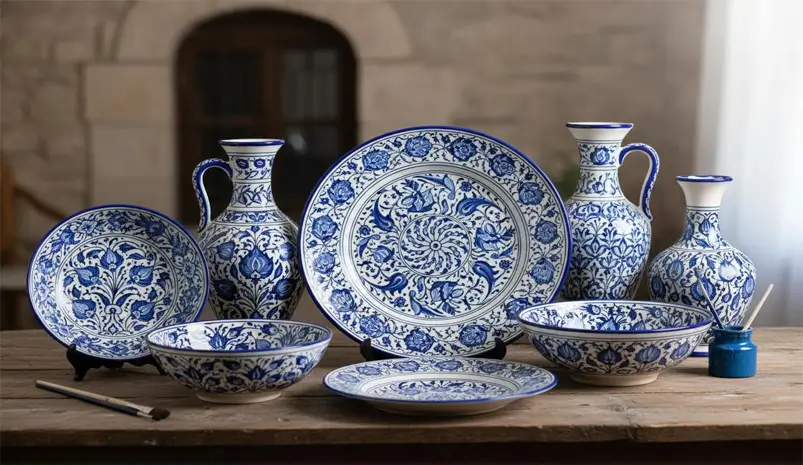
Among Rajasthan's many traditional crafts, Jaipur Blue Pottery is undoubtedly the most internationally recognised. Unlike conventional pottery made from ordinary clay, Blue Pottery is produced using a unique mixture of quartz stone powder, powdered glass, Multani mitti (Fuller's earth), gum, borax and other natural materials. This distinctive composition gives the finished products their smooth surface, delicate appearance and remarkable durability.
The craft arrived in Jaipur through Persian and Central Asian influences before being refined under royal patronage. Today it has become one of the city's signature art forms, admired for its elegant floral patterns, geometric motifs, birds, animals and traditional Mughal-inspired designs.
One of the most fascinating aspects of Blue Pottery is its colour palette. Although the craft is famous for its deep cobalt blue, artisans also use shades of:
These colours are painted entirely by hand using fine brushes before the pieces are glazed and fired.
Visitors exploring Jaipur can visit several artisan workshops where every stage of production is demonstrated. Watching experienced craftsmen sketch intricate patterns, paint delicate floral borders and prepare the kiln provides a far greater appreciation for the skill involved than simply purchasing finished products from a showroom.
Popular Blue Pottery products include:
Many workshops also conduct short pottery painting sessions where visitors can decorate their own ceramic souvenir under the guidance of local artists. These interactive experiences are especially popular with families, students and travellers interested in traditional crafts.
When purchasing Blue Pottery, buying directly from recognised artisan workshops helps ensure authenticity while supporting the families responsible for preserving this centuries-old artistic tradition.
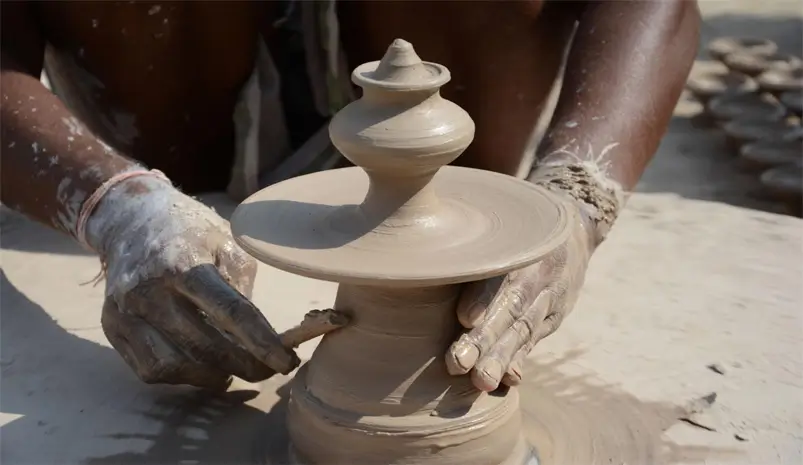
While Jaipur is known for its colourful glazed ceramics, Bikaner showcases a completely different pottery tradition rooted in the natural beauty of baked clay. Terracotta has been part of everyday life in Rajasthan for generations, serving both practical and decorative purposes.
Artisans begin by preparing locally sourced clay, carefully removing impurities before shaping each piece by hand or on a traditional potter's wheel. Once dried naturally, the pottery is fired in kilns where the clay develops its characteristic warm red, brown or earthy orange tones.
Unlike glazed ceramics, terracotta celebrates simplicity and natural textures. Many pieces feature hand-carved patterns inspired by desert life, traditional architecture and local folklore.
Travellers visiting Bikaner may encounter beautifully crafted:
Several artisan communities around Bikaner continue producing terracotta using techniques inherited through generations. Visiting these workshops allows travellers to observe the complete creative process—from preparing raw clay to shaping, drying, carving and firing each piece.
The earthy colours of terracotta contrast beautifully with Rajasthan's desert landscapes, making these handcrafted creations meaningful souvenirs that reflect the region's close relationship with its environment.
For visitors seeking authentic cultural experiences beyond the famous forts and palaces, exploring Bikaner's pottery workshops provides a deeper understanding of Rajasthan's living artistic heritage while supporting local craftsmen who continue to preserve these remarkable traditional skills.
From Jaipur's colourful Blue Pottery to Bikaner's earthy terracotta and Molela's sacred clay plaques, discover a different side of Rajasthan.
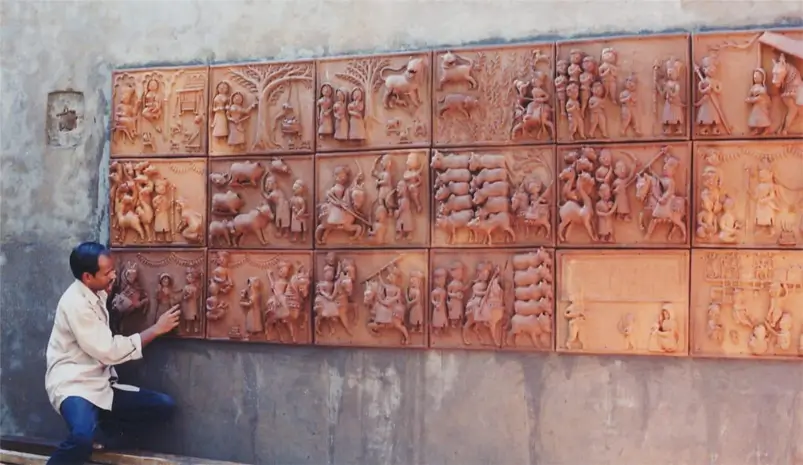
Hidden in the Rajsamand district, around 40 km from Udaipur, the small village of Molela is home to one of Rajasthan's most distinctive and spiritually significant pottery traditions. Unlike ordinary ceramic workshops, Molela is internationally known for its handcrafted terracotta relief plaques, which are created primarily for temples, shrines and tribal communities across Rajasthan, Gujarat and Madhya Pradesh.
The tradition is believed to be several centuries old, and many artisan families continue practicing the craft in the same way their ancestors did.
Instead of making bowls or decorative pots, Molela artists shape flat clay panels featuring detailed images of:
Every plaque is carefully modelled by hand before being dried in the sun and fired in traditional kilns.
After firing, many artworks are finished using natural earth pigments that enhance their warm terracotta appearance while preserving their handmade character.
Walking through Molela Village offers visitors a rare opportunity to meet master artisans working from family homes rather than commercial factories. The atmosphere is peaceful, and guests can observe every stage of production—from preparing the clay to sculpting intricate figures and arranging finished plaques for drying under the Rajasthan sun.
Many travellers purchase smaller devotional plaques or decorative wall pieces directly from the artists, ensuring that their purchase supports the local craft community.
For travellers who wish to explore Rajasthan's ceramic traditions in depth, a dedicated pottery trail can easily be combined with the state's cultural and heritage attractions.
Day 1–2: Jaipur
Highlights:
Nearby attractions:
Day 3–4: Bikaner
Highlights:
Nearby attractions:
Day 5–6: Udaipur & Molela Village
Highlights:
Nearby attractions:
This itinerary combines Rajasthan's artistic traditions with its royal heritage, offering a deeper cultural experience than a standard sightseeing tour.
Pottery workshops operate throughout the year, but the most comfortable months for visitors are:
During these months, temperatures remain pleasant for walking through artisan villages and spending time inside open workshop spaces.
Summer visits are still possible, but mornings are far more comfortable than afternoons.
The monsoon season also has its own charm, especially around Udaipur and Molela, where the surrounding countryside becomes greener.
Meet artisans, discover traditional pottery and experience the creative heritage of Jaipur, Bikaner and Molela.
Rajasthan offers an extraordinary selection of handmade ceramic products.
Popular purchases include:
Jaipur Blue Pottery
Bikaner Terracotta
Molela Clay Art
Purchasing directly from artisan workshops often provides better value while ensuring authenticity.
Supporting traditional artisans helps preserve Rajasthan's cultural heritage for future generations.
When visiting pottery workshops:
These simple actions help sustain local communities whose livelihoods depend upon traditional craftsmanship.
To make the most of your pottery tour:
Many workshops now provide professional packing services for international visitors.
While Rajasthan is famous for magnificent forts, royal palaces and colourful festivals, its pottery traditions reveal another equally fascinating layer of its cultural identity. From the brilliant glazed beauty of Jaipur's Blue Pottery to the earthy simplicity of Bikaner's terracotta creations and the sacred clay reliefs of Molela Village, each region reflects a unique artistic heritage shaped by local history, materials and community traditions.
Exploring these workshops allows travellers to meet skilled artisans, understand centuries-old techniques and witness crafts that continue to thrive in family homes rather than factories. Whether you are an art collector, photographer, interior designer, student or simply a curious traveller, a pottery and ceramic art tour through Rajasthan offers an authentic cultural journey that goes far beyond conventional sightseeing. It is an experience that connects visitors directly with the creativity, patience and craftsmanship that have defined Rajasthan for generations.
Our travel Faqs is your ultimate guide to exploring the top destinations in Rajasthan. From insider tips to comprehensive guides, we have everything you need to plan your trip with ease and convenience.
Jaipur Blue Pottery is known for its unique quartz-based composition, hand-painted floral designs and beautiful blue, turquoise and green glazed finishes.
No. Traditional Jaipur Blue Pottery is made primarily from quartz stone powder, powdered glass, Fuller's earth and natural binding materials rather than regular clay.
Several artisan workshops in Jaipur welcome visitors for demonstrations, shopping and pottery-painting experiences.
Molela Village is renowned for handcrafted terracotta relief plaques featuring Hindu deities, folk gods and traditional village scenes.
Yes. Bikaner has a long tradition of handcrafted terracotta pottery, decorative sculptures, clay lamps and household ceramics.
Yes. Many pottery studios in Jaipur offer short hands-on sessions where visitors can paint or decorate Blue Pottery items, and some workshops also provide pottery-making demonstrations.
October to March offers the most comfortable weather for visiting artisan villages and craft workshops across Rajasthan.
Yes. Most artisan workshops provide protective packaging suitable for domestic and international travel.
A dedicated 5 to 6-day itinerary covering Jaipur, Bikaner and Molela allows enough time to experience each region's unique pottery traditions.
Buying directly supports local craft families, helps preserve traditional techniques and ensures you receive authentic handmade products instead of mass-produced replicas.