
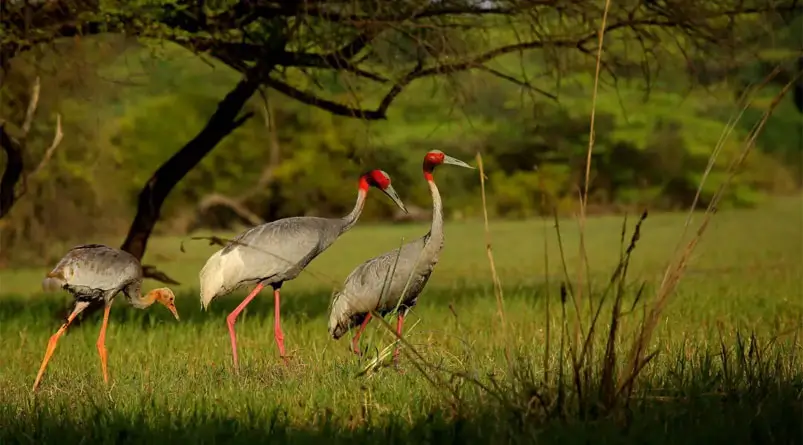
Rajasthan is globally known for its forts, deserts and royal palaces, but beyond these cultural attractions lies a surprisingly rich natural environment. The state hosts a wide variety of ecosystems including wetlands, lakes, grasslands and desert landscapes that support an extraordinary diversity of birdlife.
For wildlife enthusiasts, birdwatching in Rajasthan offers one of the most rewarding nature experiences in India. Every winter thousands of migratory birds arrive from Central Asia, Siberia and Europe, transforming the region’s lakes and wetlands into vibrant bird habitats.
Flamingos, cranes, pelicans, storks, eagles and numerous smaller species gather in large numbers across different parts of Rajasthan. The variety of landscapes allows birdwatchers to observe species that thrive in both desert and wetland ecosystems.
Many travelers visiting Rajasthan for cultural tourism are surprised to discover that the region also offers exceptional opportunities for wildlife bird photography and birdwatching tours.
With the right locations and experienced guides, birdwatchers can observe rare migratory species, spectacular flocks and unique desert birds rarely seen elsewhere.
Rajasthan’s geographic location plays a major role in its importance as a birdwatching destination. The state lies along important migratory routes used by birds traveling between northern breeding grounds and southern wintering habitats.
During winter months, large numbers of migratory birds arrive from colder regions of the world seeking warmer climates and abundant food sources.
Wetlands and lakes provide ideal feeding grounds for water birds, while grasslands and desert ecosystems support raptors and ground-dwelling species.
Because Rajasthan contains such diverse habitats, birdwatchers can observe both wetland birds and desert bird species in Rajasthan within relatively short travel distances.
This combination makes the state one of the most fascinating destinations for wildlife observers and photographers.
From flamingo-filled lakes to serene grasslands, experience Rajasthan’s rich biodiversity at your own pace. Book your private taxi today and enjoy a seamless wildlife exploration across the region.
Chat On WhatsApp Contact UsKeoladeo National Park, located in Bharatpur, is widely regarded as one of the most important birdwatching sites in Asia. The park was originally developed as a royal hunting reserve before being transformed into a protected sanctuary.
Today the park hosts hundreds of bird species throughout the year. Winter months bring an especially dramatic increase in migratory birds that arrive from distant regions.
Visitors walking or cycling through the park can observe pelicans, painted storks, spoonbills and cranes feeding in shallow wetlands.
Birdwatchers often consider Keoladeo National Park birdwatching tours essential for anyone interested in wildlife in northern India.
The park’s well-maintained paths and accessible wetlands make it possible to observe birds at close range without disturbing their natural behavior.
Sambhar Lake, located near Jaipur, is the largest inland saltwater lake in India. This vast landscape attracts enormous flocks of migratory birds each year.
During the winter season the lake becomes famous for its spectacular flamingo gatherings. Thousands of flamingos gather in shallow waters where they feed on algae and small aquatic organisms.
Watching these elegant birds move across the lake creates a breathtaking visual experience.
Birdwatchers visiting Sambhar Lake can also observe other species such as avocets, sandpipers, gulls and various migratory ducks.
The vast open landscape offers excellent opportunities for bird photography in Rajasthan wetlands.
Because the lake is relatively close to Jaipur, it can easily be included in day trips for travelers interested in nature.
Tal Chhapar Wildlife Sanctuary provides a completely different birdwatching environment compared to Rajasthan’s wetlands. Located in the Shekhawati region, this grassland sanctuary is famous for its desert ecosystem.
The open plains allow birdwatchers to observe numerous raptor species such as harriers, eagles and falcons that hunt across the grasslands.
Tal Chhapar is particularly known for sightings of the elegant blackbuck antelope as well as migratory birds that prefer dry habitats.
Visitors interested in desert birdwatching in Rajasthan often include this sanctuary in their wildlife itineraries.
The wide open terrain also makes it easier to observe birds in flight, creating excellent conditions for photography.
Desert National Park near Jaisalmer represents one of the most unique wildlife environments in India. This vast protected area preserves large sections of the Thar Desert ecosystem.
Birdwatchers visiting the park often hope to see the critically endangered Great Indian Bustard, one of the rarest birds in the world.
The park also hosts desert species such as sandgrouse, larks and wheatears that have adapted to survive in harsh arid environments.
Observing these birds in the dramatic desert landscape offers a completely different experience from wetland birdwatching.
Wildlife photographers often travel long distances to capture images of rare desert birds in Rajasthan within this protected environment.
While birdwatching is possible throughout the year, winter is widely considered the best season for observing migratory birds.
During the cooler months, wetlands and lakes across Rajasthan become temporary homes for thousands of birds arriving from colder regions.
Large flocks gather around water bodies, creating spectacular opportunities for observation and photography.
Early morning and late afternoon are typically the best times to observe bird activity when many species are feeding or moving between habitats.
Travelers planning wildlife itineraries often combine Rajasthan birdwatching tours with other nature experiences such as wildlife safaris or desert excursions.
Rajasthan’s diverse landscapes create exceptional conditions for wildlife photography. Wetlands provide reflections of birds on calm water surfaces, while desert habitats offer dramatic lighting conditions.
Photographers often capture images of birds flying across sunrise skies or standing in shallow lakes surrounded by colorful landscapes.
Many birdwatchers carry telephoto lenses to photograph species without disturbing their natural behavior.
Because bird activity varies throughout the day, spending extended time at wildlife locations often produces the most rewarding photographic results.
Birdwatching tours guided by experienced naturalists can also increase the chances of spotting rare species.
While observing birds can be an exciting experience, it is important for visitors to follow responsible wildlife practices.
Maintaining a respectful distance ensures that birds are not disturbed while feeding or nesting.
Avoiding loud noises and sudden movements helps preserve the natural behavior of wildlife.
Travelers should also follow local guidelines established by wildlife authorities within protected areas.
Responsible tourism ensures that Rajasthan’s bird habitats remain protected for future generations while allowing visitors to enjoy these extraordinary natural environments.
Discover a quieter, wilder side of Rajasthan filled with birdlife and natural beauty. Plan your journey with a private car and driver to explore hidden wetlands, sanctuaries, and nature reserves with ease.
Chat On WhatsApp Contact UsRajasthan’s wildlife environments provide a fascinating contrast to the region’s cultural landmarks. Lakes filled with flamingos, grasslands hosting raptors and desert landscapes supporting rare species create extraordinary nature experiences.
Birdwatching allows travelers to explore landscapes that many visitors overlook while focusing on forts and palaces.
For wildlife enthusiasts, these environments reveal another side of Rajasthan that is rich in biodiversity and natural beauty.
Travelers exploring wetlands, sanctuaries and nature reserves across Rajasthan can easily reach these destinations with experienced local drivers.
Rajasthan Tour Taxi provides private car and driver services for travelers visiting wildlife parks, wetlands and birdwatching locations across Rajasthan.
Mr. Shakeer
+91-9314165249
raj.tours.jp@gmail.com