
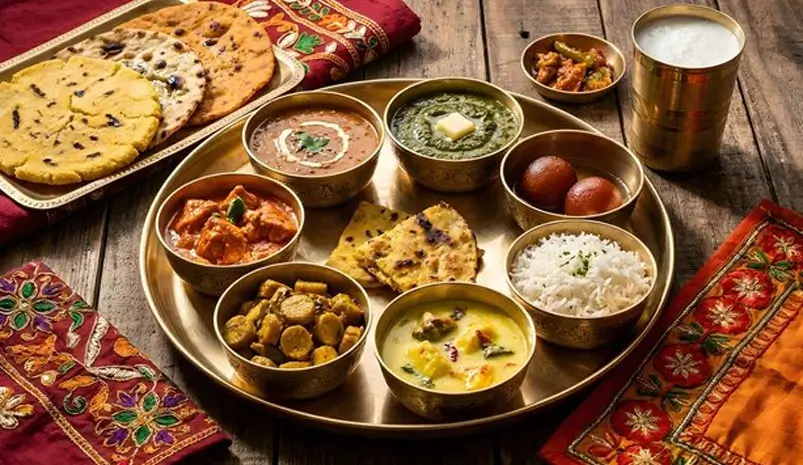
Food in Rajasthan is far more than a simple meal. Every traditional dish served across the state carries stories of royal kitchens, desert survival techniques, local spices, and generations of culinary traditions. Among all regional meals in India, the Rajasthani Thali stands apart because it combines multiple flavors, textures, cooking styles, and cultural influences on a single platter. Travelers visiting Jaipur, Jodhpur, Udaipur, Jaisalmer, Pushkar, and Bikaner often consider tasting an authentic thali one of the most important experiences during their Rajasthan journey.
Unlike modern restaurant platters that focus mainly on presentation, a traditional Rajasthani food thali is deeply connected to local climate and history. Rajasthan’s dry desert conditions influenced the use of ingredients that could survive heat and water scarcity. This is why many dishes include gram flour, dried lentils, clarified butter, spices, and preserved vegetables. Over time, royal Rajput kitchens added luxurious touches through rich gravies, sweets, nuts, and festive recipes, creating the grand thali that travelers enjoy today.
An authentic thali is not limited to one or two dishes. A complete serving may include Dal Baati Churma, Gatte Ki Sabzi, Ker Sangri, Bajra Roti, Papad Ki Sabzi, Kadhi, garlic chutney, sweet dishes, pickles, buttermilk, and multiple breads served together. Each component balances spice, sweetness, richness, and texture in a way that represents traditional Rajasthan hospitality.
Tourists traveling with a private Rajasthan tour taxi often plan special food stops across different cities because every region serves slightly different thali variations. Jaipur restaurants may focus on royal-style dining, Jodhpur restaurants often offer spicier flavors, while Udaipur combines traditional meals with scenic lake-view dining experiences. Travelers wanting the complete culinary journey usually include food exploration as part of their Rajasthan sightseeing tour itinerary.
One of the biggest reasons travelers remember a traditional Rajasthani thali long after their trip ends is the extraordinary variety served together. Unlike meals where dishes are ordered separately, a thali creates a complete dining experience that showcases the region’s culinary identity on one large platter.
The uniqueness begins with the cooking methods. Rajasthan developed recipes suited for desert living where water availability remained limited for centuries. As a result, many dishes require less water and rely heavily on spices, yogurt, clarified butter, and preserved ingredients. Foods were designed to remain fresh for long journeys and military expeditions undertaken by Rajput warriors.
Another distinctive feature is the generous use of pure ghee. Traditional households and heritage restaurants often pour melted ghee over baati, rotis, rice, and sweets to enhance richness and flavor. While modern restaurants sometimes reduce the quantity for lighter dining preferences, authentic rural and heritage-style thalis still preserve the original richness.
The thali also balances contrasting tastes extremely well. Spicy curries are paired with sweet churma, tangy chutneys, cooling buttermilk, crunchy papad, and soft breads. This combination prevents the meal from feeling repetitive despite its richness.
Hospitality forms another essential part of the experience. In Rajasthan, guests are often encouraged repeatedly to continue eating, reflecting the local belief that serving food generously is a matter of honor and respect. Travelers dining at heritage havelis or traditional restaurants frequently notice staff continuously offering additional servings.
Regional diversity also makes the thali special. In desert regions like Jaisalmer and Bikaner, dishes may feature more dried vegetables and stronger spice profiles. In Udaipur and southern Rajasthan, flavors can feel slightly milder with influences from neighboring regions. Jaipur restaurants often combine royal recipes with modern presentation styles designed for international tourists.
A Rajasthani thali is more than a meal—it's a celebration of centuries-old traditions, bold flavors, and royal hospitality. Let us take you beyond the tourist spots to discover authentic dining experiences that reveal the true taste of Rajasthan.
The heart of every authentic Rajasthani thali lies in its variety of dishes. Each item contributes a different flavor and texture, creating a complete culinary experience rather than a single heavy meal.
Dal Baati Churma remains the most iconic dish of Rajasthan. Baati refers to hard baked wheat dumplings cooked traditionally over charcoal or firewood. These are crushed slightly and drenched in ghee before being eaten with spicy mixed lentil dal. Churma, the sweet component, is prepared using crushed wheat, sugar or jaggery, and ghee. Together, these three elements create Rajasthan’s most celebrated food combination.
Gatte Ki Sabzi is another staple found in almost every thali. Gram flour dumplings are cooked in a yogurt-based curry flavored with traditional spices. The dish developed partly because fresh vegetables were historically difficult to preserve in desert conditions.
Ker Sangri represents authentic desert cuisine. Ker berries and sangri beans grow naturally in arid regions and are cooked with spices to produce a tangy and earthy flavor unique to Rajasthan. Travelers searching for true regional cuisine usually look specifically for this dish.
Papad Ki Sabzi transforms ordinary papad into a flavorful curry prepared with yogurt and spices. This creative recipe demonstrates how Rajasthan developed innovative cooking methods using limited ingredients.
Bajra Roti and Missi Roti often accompany the thali. Bajra, or pearl millet, remains highly nutritious and suitable for desert climates. These breads are usually served with white butter, garlic chutney, or jaggery.
Sweet dishes also hold an important place. Ghewar, Malpua, Rabdi, Moong Dal Halwa, and churma variations commonly appear in premium thali experiences. Traditional restaurants serving royal-style meals often include multiple desserts.
Additional accompaniments may include green chutney, garlic chutney, mango pickle, onion salad, boondi raita, buttermilk, rice, and seasonal vegetables. Luxury restaurants sometimes expand the thali further with saffron rice, paneer preparations, and festive sweets designed especially for tourists.
Jaipur remains one of the best cities for travelers wanting a complete Rajasthani thali experience because the city offers everything from royal heritage dining to affordable local restaurants. Tourists arriving in Jaipur often dedicate an entire afternoon or evening specifically for traditional food exploration.
Chokhi Dhani is among the most famous cultural dining destinations near Jaipur. Designed like a traditional Rajasthani village, it combines folk performances, camel rides, puppet shows, and large thali meals served in traditional style. Visitors sit comfortably while servers continuously offer fresh servings of dal, baati, curries, sweets, and breads. The atmosphere especially appeals to foreign tourists looking for both food and cultural entertainment.
Laxmi Mishthan Bhandar, commonly known as LMB, remains another iconic dining location inside Jaipur’s old city. Famous for traditional sweets and vegetarian meals, the restaurant attracts travelers searching for authentic flavors in a historic market setting.
Spice Court is popular among travelers wanting slightly refined presentation while still preserving traditional recipes. The restaurant serves famous dishes like Laal Maas alongside complete thali options and remains a preferred stop during Jaipur sightseeing tours.
1135 AD inside Amer Fort offers one of the most luxurious dining settings in Rajasthan. Although premium priced, the restaurant combines royal interiors, palace ambiance, and carefully prepared traditional dishes, making it ideal for travelers wanting a heritage dining experience.
Many travelers booking a Jaipur private taxi tour include Amer Fort, City Palace, Hawa Mahal, and traditional dinner experiences together in a single itinerary. Evening food tours have become especially popular among international visitors wanting to taste multiple local dishes comfortably.
The aroma of fresh spices, the warmth of traditional hospitality, and the joy of sharing a royal thali create memories that last long after your journey ends.
Jodhpur and Udaipur both offer exceptional Rajasthani thali restaurants, though each city presents slightly different culinary personalities.
In Jodhpur, Gypsy Restaurant remains highly recommended for traditional thali meals. The restaurant is famous for serving authentic flavors with generous portions and traditional hospitality. Travelers visiting Mehrangarh Fort, Clock Tower Market, and nearby attractions often stop here for lunch or dinner.
Janta Sweet Home is another well-known local favorite where travelers can taste regional snacks and sweets alongside complete meal options. The city’s cuisine generally features slightly stronger spice levels compared to Jaipur.
Indique Restaurant near the old city offers rooftop dining with fort views while serving traditional dishes in a more contemporary environment. Tourists frequently combine sunset fort photography with dinner reservations here.
Udaipur offers a more romantic and scenic dining atmosphere due to its lakes and palace surroundings. Ambrai Restaurant remains one of the most famous places for travelers wanting traditional food with spectacular Lake Pichola and City Palace views. Evening dining here becomes especially memorable because of illuminated palace reflections across the water.
Natraj Dining Hall is another legendary thali destination in Udaipur known for authentic vegetarian meals served continuously in traditional style. Visitors often praise the freshness and homemade flavors of the dishes.
Many travelers booking a Rajasthan tour by car plan food experiences city by city because regional variations become noticeable across different destinations. A well-planned itinerary allows tourists to compare flavors, spice levels, and presentation styles throughout Rajasthan.
Travelers exploring Rajasthan food culture often face an interesting choice between street food experiences and heritage dining restaurants. Both offer completely different perspectives on local cuisine.
Street food provides quick access to regional flavors at affordable prices. Cities like Jodhpur, Jaipur, and Bikaner are famous for snacks such as Mirchi Bada, Pyaaz Kachori, Mawa Kachori, Samosa, and Kulhad Lassi. These dishes reflect the everyday eating habits of local residents and are usually prepared using recipes passed down through generations.
Street food markets become especially lively during evening hours. Sardar Market in Jodhpur and Johari Bazaar areas in Jaipur attract visitors searching for authentic snacks and sweets. Travelers walking through these markets experience the vibrant energy of Rajasthan’s local food scene.
Heritage dining, however, focuses more on atmosphere, royal presentation, and complete culinary storytelling. Palace hotels, haveli restaurants, and cultural resorts recreate royal-style meals using silverware, traditional seating arrangements, folk music, and elaborate service patterns.
Luxury travelers often prefer heritage dining because it combines architecture, hospitality, music, and food together. Many premium restaurants also explain the history behind dishes, helping international tourists better understand Rajasthan’s culinary traditions.
Food-focused travelers frequently combine both experiences during their trip. A typical Rajasthan private driver tour may include daytime street food tasting and evening heritage dining, creating a balanced culinary journey across the state.
Travelers tasting Rajasthani cuisine for the first time should prepare for rich flavors, generous portions, and significant spice usage in certain dishes. Since traditional meals often contain heavy use of ghee and spices, starting slowly helps international visitors adjust comfortably.
Ordering a complete thali remains the best way to sample multiple dishes without choosing individual items separately. Most restaurants offer unlimited servings, so visitors do not need to worry about portion size.
Spice tolerance varies significantly across Rajasthan. Jodhpur cuisine generally feels spicier, while tourist-oriented restaurants in Jaipur and Udaipur may offer milder versions suitable for foreign travelers.
Buttermilk, known locally as chaas, helps balance spicy flavors and supports digestion after heavy meals. Many restaurants include it automatically with traditional thalis.
Vegetarian food dominates traditional Rajasthan cuisine, though non-vegetarian dishes like Laal Maas and Safed Maas are also highly popular in royal-style restaurants.
Travelers with dietary restrictions should communicate preferences clearly before ordering because some dishes may contain dairy products, clarified butter, nuts, or yogurt-based gravies.
Booking a Rajasthan taxi tour with flexible sightseeing timing allows tourists to stop comfortably at famous food destinations without rushing between attractions. Experienced local drivers often recommend lesser-known restaurants popular among residents rather than only tourist-heavy locations.
Our travel Faqs is your ultimate guide to exploring the top destinations in Rajasthan. From insider tips to comprehensive guides, we have everything you need to plan your trip with ease and convenience.
A typical thali includes Dal Baati Churma, Gatte Ki Sabzi, Ker Sangri, breads, rice, sweets, chutneys, pickles, papad, and buttermilk.
Jaipur, Jodhpur, and Udaipur all offer excellent thali experiences with different regional styles.
Standard thalis may cost between INR 300 and INR 800, while luxury heritage dining experiences can exceed INR 2000 per person.
It is Rajasthan’s most famous dish consisting of lentil curry, baked wheat dumplings, and sweet crushed wheat dessert.
Some dishes can be spicy, especially in Jodhpur, but many restaurants prepare milder versions for tourists.
Yes, Rajasthan is highly famous for its vegetarian cuisine and traditional vegetarian thalis.
Ghewar, Malpua, Rabdi, and Churma are among the most popular traditional sweets.
Yes, most tourist-oriented restaurants offer balanced spice levels suitable for international visitors.
Street food is generally safe at busy and popular stalls with good hygiene and high customer turnover.
Many tourists book a private Rajasthan tour taxi or local sightseeing cab to comfortably combine food exploration with heritage attractions.