
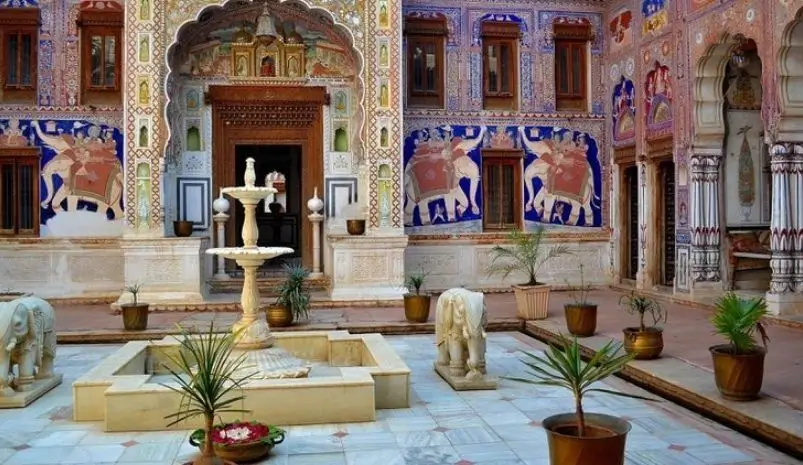
Unlike Rajasthan's famous cities known for forts and palaces, the Shekhawati Region tells its story through beautifully painted mansions that line quiet streets and traditional market squares. Spread across the districts of Jhunjhunu, Sikar and Churu, this historic region is home to hundreds of grand havelis decorated with colourful frescoes, detailed carvings and impressive courtyards. Every town has its own character, yet together they form one of India's richest collections of heritage architecture.
Often called the World's Largest Open Air Art Gallery, Shekhawati attracts travellers who appreciate architecture, history, photography and local culture. Unlike museums where paintings remain behind glass, the artwork here covers entire building facades, gateways, balconies and inner courtyards. Walking through towns such as Mandawa, Nawalgarh and Fatehpur feels like moving through an outdoor gallery where nearly every street reveals another beautifully decorated haveli.
Many visitors travelling between Jaipur and Bikaner or Rajasthan's desert destinations overlook this region because it is less commercial than Jaipur, Udaipur or Jodhpur. Those who include Shekhawati in their itinerary often describe it as one of the most rewarding experiences in Rajasthan. The peaceful atmosphere allows travellers to enjoy heritage architecture without the large crowds commonly found at major tourist attractions.
For photographers, historians and anyone interested in traditional craftsmanship, the Shekhawati Region offers an opportunity to experience Rajasthan from a completely different perspective. The region preserves stories of wealthy merchant families, artistic traditions and trade routes that once connected Rajasthan with distant parts of India and beyond.
The title World's Largest Open Air Art Gallery is closely associated with the Shekhawati Region because nowhere else in India contains such a large concentration of painted heritage mansions spread across multiple historic towns. Instead of displaying artwork inside museums, artists transformed entire buildings into enormous canvases filled with colourful frescoes, mythological scenes, floral designs and illustrations inspired by daily life.
During the eighteenth and nineteenth centuries, prosperous merchant families built magnificent residences throughout the region. As their wealth increased through trade, they competed to create increasingly impressive homes. Skilled painters decorated walls, ceilings, entrances and courtyards with intricate artwork that reflected both traditional beliefs and changing social influences. Some frescoes depict scenes from Indian epics, while others portray railway engines, steamships, European visitors and technological developments that fascinated local artists during that period.
One remarkable feature of the artwork is its variety. No two havelis appear exactly alike. Even neighbouring buildings display different colours, themes and decorative styles. Some emphasise religious subjects, while others celebrate trade, festivals or family history. This diversity makes every walk through Shekhawati unique.
Unlike heritage monuments protected within enclosed complexes, many painted havelis remain part of ordinary streets where local residents continue their daily routines. Visitors can admire centuries-old artwork while watching village life unfold around them. This combination of living culture and historic architecture creates an atmosphere rarely experienced elsewhere in Rajasthan.
The open nature of these heritage towns also allows photographers to experiment with different lighting conditions throughout the day. Early morning sunlight highlights intricate paintings, while evening light produces softer colours that enhance the texture of old walls and carved wooden doors.
Although weather and time have affected some frescoes, restoration efforts continue to preserve many of the region's finest buildings. Responsible tourism also plays an important role in protecting this extraordinary artistic heritage for future generations.
Imagine strolling through quiet heritage streets where entire buildings become works of art. Discover colourful frescoes, carved balconies, traditional courtyards, historic mansions.
.webp)
Among all the towns in the Shekhawati Region, Mandawa is usually the first choice for visitors. Located approximately 170 kilometres from Jaipur, the town is well connected by road and offers comfortable heritage hotels, making it an excellent base for exploring the surrounding area.
Walking through Mandawa feels like entering an open-air museum. Narrow streets are lined with beautifully decorated havelis featuring colourful frescoes, carved balconies and grand entrance gates. Many buildings remain privately owned, while others have been converted into boutique heritage hotels that allow guests to experience traditional Rajasthani architecture from within.
One of the town's most recognised landmarks is Mandawa Fort, which overlooks the historic settlement. The fort has been transformed into a heritage hotel, but visitors can still admire its traditional architecture and elevated views across the town. Nearby, several famous havelis display remarkable examples of Shekhawati's artistic heritage. Every building reflects the prosperity of merchant families who once played a major role in regional trade.
Mandawa is also one of the best places in Rajasthan for leisurely photography. Unlike crowded tourist destinations, visitors can spend time observing architectural details without feeling hurried. Painted facades, decorative windows, traditional doorways and quiet lanes create countless opportunities for memorable photographs.
The local market adds another layer to the experience. Small shops sell handicrafts, textiles, traditional artwork and souvenirs inspired by Shekhawati's famous frescoes. Local cafés and family-run restaurants also provide an opportunity to enjoy authentic Rajasthani cuisine between sightseeing stops.
Most travellers spend half a day to a full day exploring Mandawa, although photography enthusiasts often stay longer to capture changing light across the painted buildings. Because the town lies conveniently along several popular Rajasthan road routes, it is frequently included in private tours connecting Jaipur, Bikaner and other destinations.
.webp)
While Mandawa often receives the greatest attention, Nawalgarh and Fatehpur are equally important destinations for anyone wishing to understand the artistic legacy of the Shekhawati Region. Each town preserves its own collection of painted havelis, temples and historic buildings, offering visitors a broader appreciation of the region's architectural diversity.
Nawalgarh is widely known for its beautifully restored mansions and impressive museums. Several heritage properties allow visitors to walk through richly decorated rooms where colourful frescoes cover walls and ceilings. The town also features attractive gateways, traditional markets and peaceful streets that encourage relaxed exploration on foot.
A short drive away, Fatehpur presents another remarkable concentration of painted havelis. Many buildings display exceptionally detailed frescoes that have survived for generations despite changing weather conditions. Walking through the town reveals artistic themes ranging from mythology and royal life to scenes inspired by international travel and technological innovation.
Together, Mandawa, Nawalgarh and Fatehpur create the heart of the Shekhawati Region, allowing visitors to experience one of Rajasthan's most distinctive cultural landscapes. Travelling between these towns by private vehicle makes it possible to stop frequently for photography, local interactions and heritage walks that would be difficult to enjoy on a fixed group schedule.
The Shekhawati Region can be visited throughout the year, but the overall experience changes with the seasons. Since most sightseeing takes place outdoors, pleasant weather allows visitors to spend more time walking through heritage streets and admiring the painted havelis without discomfort.
The most comfortable months generally fall between October and March. Daytime temperatures remain suitable for walking, photography and heritage tours, while mornings and evenings offer excellent natural light for capturing the colourful frescoes. This period is also ideal for travellers combining Shekhawati with Jaipur, Bikaner, Jodhpur or other destinations across Rajasthan.
Summer months often bring high daytime temperatures. Visitors travelling during this season should begin sightseeing early in the morning, take a short afternoon break and continue exploring later in the day when the weather becomes more pleasant. Carrying drinking water, sunscreen, sunglasses and a hat is recommended during warmer months.
The monsoon season changes the appearance of the region in a subtle but attractive way. Occasional rainfall removes dust from the streets, and cloudy skies create softer lighting that photographers often appreciate. Since the frescoes display richer colours under diffused light, many photography enthusiasts enjoy visiting during this period.
Because the Shekhawati towns are relatively peaceful compared with Rajasthan's larger tourist cities, travellers can usually enjoy a relaxed sightseeing experience without long queues or overcrowded streets.
Step into a Rajasthan few travellers take the time to discover. Wander through the beautifully painted streets of Mandawa, admire the magnificent havelis of Nawalgarh.
One of the advantages of visiting the Shekhawati Region is its convenient road connectivity with several major destinations in Rajasthan. The region is best explored by private vehicle because the painted havelis are spread across different towns, making flexible transportation extremely useful.
Approximate Road Distances
|
Destination |
Distance |
|---|---|
|
Jaipur to Mandawa |
Around 170 km |
|
Jaipur to Nawalgarh |
Around 150 km |
|
Jaipur to Fatehpur |
Around 180 km |
|
Bikaner to Mandawa |
Around 190 km |
|
Delhi to Mandawa |
Around 260 km |
Travellers arriving by air usually begin their journey from Jaipur International Airport, which is the nearest major airport connected with domestic and international flights. From Jaipur, reaching Mandawa generally takes about three to four hours by road depending on traffic conditions.
Rail connectivity is available through nearby stations such as Jhunjhunu, Sikar and Churu, although road travel remains the most practical option for visitors wishing to explore multiple heritage towns in a single trip.
Hiring a private chauffeur-driven vehicle allows travellers to stop at smaller villages, photograph lesser-known havelis and enjoy the journey without being restricted by public transport schedules. Since many historic buildings are located within narrow streets, walking remains the best way to experience each town after arrival.
Unlike Rajasthan's major forts and palaces, the attractions in the Shekhawati Region are spread across living towns where local communities continue their daily routines. Respecting private property is therefore important while exploring the painted havelis. Some buildings remain family residences, while others operate as museums or heritage hotels. Visitors should always ask permission before entering privately owned courtyards.
Comfortable walking shoes are recommended because much of the sightseeing involves exploring narrow streets and old neighbourhoods on foot. Although the walking is not physically demanding, the uneven stone surfaces found in some areas require suitable footwear.
Photography is one of the highlights of the region. Early morning and late afternoon provide the most attractive natural light for capturing frescoes, carved balconies and colourful facades. A zoom lens is useful for photographing artwork located on upper floors, while a wide-angle lens helps capture entire havelis within narrow streets.
Cash can be useful in smaller shops and local markets, although digital payment options are becoming increasingly common. Visitors interested in purchasing traditional artwork or handicrafts should buy from reputable local stores to support regional artisans.
Keeping the streets clean and avoiding unnecessary contact with fragile painted walls helps preserve these historic buildings for future visitors. The frescoes have survived for generations, and responsible tourism plays an important role in protecting this remarkable heritage.
The best way to experience the Shekhawati Region is by travelling at a relaxed pace. Unlike destinations where visitors focus on a single monument, Shekhawati rewards those who stop frequently, walk through heritage streets and spend time appreciating architectural details that are easy to overlook during a rushed visit.
With Rajasthan Tour Taxi, travellers can customise their itinerary according to their interests. Whether you wish to spend more time photographing the painted havelis of Mandawa, visit museums in Nawalgarh, admire the frescoes of Fatehpur, or combine the region with Jaipur, Bikaner or Jodhpur, a private vehicle offers complete flexibility.
Mr. Shakeer and his experienced team specialise in private Rajasthan tours designed for international visitors seeking comfort, reliable transportation and local knowledge. A chauffeur-driven journey allows you to travel at your own pace, stop whenever you wish for photography and enjoy the heritage towns without worrying about transport connections or fixed group schedules.
Our travel Faqs is your ultimate guide to exploring the top destinations in Rajasthan. From insider tips to comprehensive guides, we have everything you need to plan your trip with ease and convenience.
The region contains hundreds of painted havelis spread across several historic towns, where colourful frescoes cover the exterior and interior walls of heritage buildings.
Mandawa is the most popular destination because of its heritage hotels, painted mansions and convenient location, but Nawalgarh and Fatehpur are equally rewarding.
A full day covers the main highlights, while two days provide enough time to visit Mandawa, Nawalgarh and Fatehpur at a relaxed pace.
The most comfortable period is generally between October and March when the weather is pleasant for walking and photography.
Yes. The painted havelis, carved balconies, traditional streets and heritage architecture make the region one of Rajasthan's finest photography destinations.
Yes. Mandawa can be visited on a long day trip from Jaipur, although an overnight stay allows more time to explore the surrounding heritage towns.
Some havelis operate as museums or heritage hotels, while others remain privately owned. Visitors should respect local guidelines and seek permission where required.
A private vehicle is the most convenient option because it allows flexible travel between the towns and easy access to heritage sites.
Yes. Several restored havelis and historic properties have been converted into heritage hotels that offer a traditional Rajasthani stay.
Rajasthan Tour Taxi provides private chauffeur-driven tours covering Mandawa, Nawalgarh, Fatehpur and other destinations across Rajasthan, allowing travellers to enjoy a comfortable and personalised travel experience.