
Rajasthan is widely celebrated for its magnificent forts, royal palaces, colorful markets and desert landscapes. Yet beyond these architectural wonders lies one of the most powerful expressions of the region’s heritage: its music and performing arts. Traditional songs, rhythmic instruments, storytelling performances and vibrant dances form an important part of everyday life across Rajasthan.
For travelers exploring the region, experiencing traditional Rajasthani music and folk performances offers a deeper understanding of the culture that shaped this historic land. Music has always been a central part of Rajasthani life. Royal courts once supported musicians and storytellers who preserved history through songs, while village communities passed down folk traditions across generations.
Today, these cultural performances remain alive in desert villages, heritage hotels, cultural festivals and local celebrations. Visitors who attend a live performance often discover that Rajasthani music is not simply entertainment; it is a living expression of identity, storytelling, and tradition.
Travelers exploring Rajasthan through private Rajasthan tours frequently include cultural evenings where musicians and dancers perform traditional art forms that have been preserved for centuries.
Music has played a central role in Rajasthan’s cultural identity for hundreds of years. Historically, royal courts supported professional musicians who composed songs about kings, battles, love stories, and spiritual themes. These musicians often belonged to hereditary communities that specialized in performing arts.
In rural areas, music also accompanied everyday life. Songs were performed during weddings, harvest festivals, religious ceremonies, and family gatherings. Each region of Rajasthan developed its own distinctive musical styles influenced by local traditions and instruments.
The desert environment itself shaped the sound of Rajasthani music. Instruments such as the sarangi, kamaicha, and dholak create melodies that echo across open landscapes. Many songs feature poetic lyrics describing desert life, heroic legends, and spiritual devotion.
For travelers interested in authentic cultural experiences, attending Rajasthani folk music performances provides insight into how these traditions continue to thrive today.
Dive into the colorful world of Rajasthan’s folk music and dance. Witness mesmerizing performances, traditional instruments, and vibrant costumes.
Chat On WhatsApp Contact UsOne of the most respected musical communities in Rajasthan is the Manganiyar community. These hereditary musicians have performed for centuries in royal courts and village gatherings, preserving ancient compositions through oral tradition.
Manganiyar musicians often perform devotional songs, desert ballads, and historical narratives accompanied by instruments such as the kamaicha and dholak. Their performances are known for powerful vocals and intricate rhythms that captivate audiences.
Many travelers encounter Manganiyar musicians during desert camps near Jaisalmer or cultural performances organized by heritage hotels. These musicians often wear colorful traditional clothing and perform with remarkable energy and emotion.
Experiencing Manganiyar folk music in Rajasthan offers visitors a glimpse into a living tradition that connects modern audiences with centuries-old musical heritage.
Among the most famous cultural performances in Rajasthan is the Kalbeliya dance. This dynamic dance form originated within the Kalbeliya community, traditionally associated with snake charming and desert nomadic life.
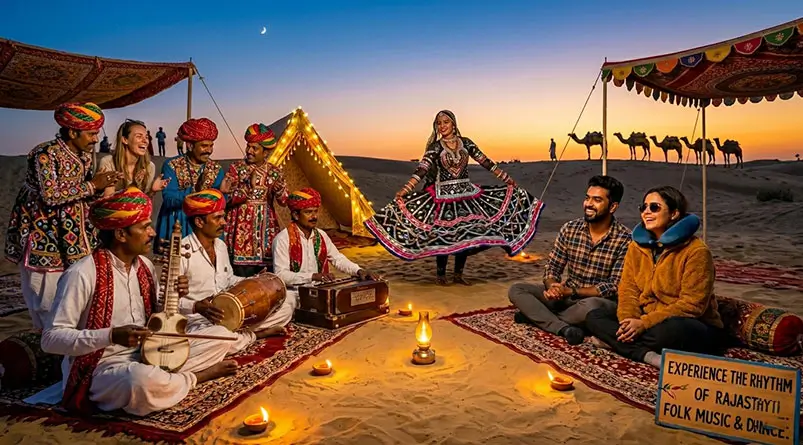
Kalbeliya dancers are known for their graceful spinning movements and elaborate black costumes decorated with mirror work and embroidery. The dance often resembles the fluid movement of snakes, reflecting the community’s historical connection with snake handling.
Live Kalbeliya performances are accompanied by traditional instruments such as the pungi, dholak, and khartal. The rhythm gradually intensifies as dancers perform increasingly complex movements that captivate audiences.
Visitors often witness Kalbeliya dance performances in Rajasthan desert camps, where dancers perform under open skies accompanied by live musicians. These performances represent one of the most recognizable cultural traditions of Rajasthan.
Another famous dance form closely associated with Rajasthan’s royal heritage is the Ghoomar dance. Traditionally performed by women during celebrations and weddings, Ghoomar is characterized by graceful circular movements and flowing traditional costumes.
During the dance, performers wear vibrant ghagras (skirts) that create mesmerizing patterns as they spin. The dance is accompanied by traditional songs and rhythmic clapping that build a celebratory atmosphere.
Historically, Ghoomar was performed in royal courts during festive occasions. Today it remains an important part of cultural festivals and heritage events throughout Rajasthan.
Travelers attending cultural evenings in Rajasthan heritage hotels often experience Ghoomar performances that recreate the elegance of royal celebrations.
The desert region around Jaisalmer offers some of the most atmospheric cultural performances in Rajasthan. Many travelers visiting the Thar Desert spend an evening at desert camps where traditional musicians and dancers perform under the stars.
These desert performances often include a combination of Manganiyar music, Kalbeliya dance, and storytelling traditions. The desert setting adds a magical atmosphere as lanterns illuminate the stage and musicians perform against the backdrop of sand dunes.
Visitors often sit around a campfire while listening to folk songs that describe desert life, heroic tales, and spiritual themes. The simplicity of the setting allows the music to take center stage.
For many travelers, attending desert folk music performances in Jaisalmer becomes one of the most memorable cultural experiences of their Rajasthan journey.
Traditional Rajasthani music relies on several distinctive instruments that create its unique sound. These instruments have been used for generations and remain central to folk performances.
The kamaicha, a string instrument played with a bow, produces deep resonant melodies often used in Manganiyar music. The sarangi is another string instrument known for its emotional tone and expressive range.
Percussion instruments such as the dholak and nagada create rhythmic foundations for many folk songs and dances. Smaller instruments like khartal and morchang add intricate rhythmic layers.
These instruments together create the vibrant soundscape that defines Rajasthani folk music traditions.
Add a cultural touch to your Rajasthan trip by experiencing live folk music and dance performances. Enjoy authentic rhythms.
Chat On WhatsApp Contact UsVisitors exploring Rajasthan can experience traditional music and dance in many locations. Heritage hotels often organize evening cultural programs featuring local musicians and dancers.
Desert camps near Jaisalmer provide immersive experiences where performances take place in natural desert settings.
Cultural villages such as Chokhi Dhani in Jaipur recreate traditional Rajasthani environments where travelers can enjoy folk performances alongside regional cuisine.
Festivals held across Rajasthan also showcase traditional music and dance, attracting performers from different communities throughout the state.
Travelers exploring the region through Rajasthan cultural tours often include these performances as part of their itinerary.
Experiencing Rajasthan Through Its Music
Traditional music and dance provide a powerful connection between Rajasthan’s past and present. These art forms continue to tell stories of royal history, desert life, spiritual devotion, and community celebration.
For travelers seeking authentic cultural experiences, attending live performances reveals aspects of Rajasthan that cannot be understood through monuments alone.
The rhythm of the instruments, the vibrant costumes, and the storytelling songs create an atmosphere that reflects the soul of the region.
Visitors who witness live Rajasthani folk performances often discover that music becomes one of the most memorable elements of their journey.
Travelers exploring Rajasthan can experience these cultural traditions through personalized travel itineraries arranged by experienced local drivers.
Rajasthan Tour Taxi provides private car and driver services for travelers exploring Rajasthan’s heritage cities and cultural destinations.
Owner: Mr. Shakeer
Call/WhatsApp: +91-9314165249
Gmail: raj.tours.jp@gmail.com