
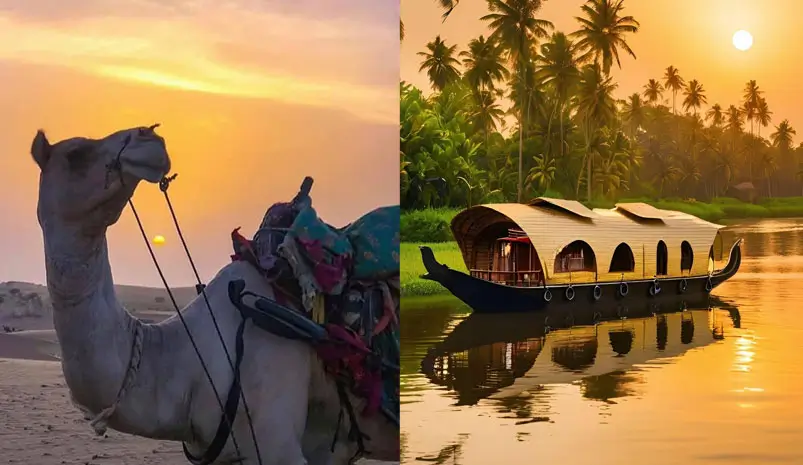
India is home to an incredible variety of travel experiences, but few destinations showcase its diversity better than Rajasthan and Kerala. While Rajasthan is famous for its magnificent forts, royal palaces, colourful culture, and vast desert landscapes, Kerala is known for its peaceful backwaters, tropical beaches, lush hill stations, and Ayurvedic wellness retreats. Both states are among the most popular destinations for international travellers, yet they offer completely different experiences. Choosing between Rajasthan and Kerala can be challenging, especially for first-time visitors planning a holiday in India.
This comprehensive Rajasthan vs Kerala travel guide has been created to help foreign tourists compare both destinations from every important perspective. Whether you are interested in history, nature, luxury travel, wildlife, food, safety, or the best time to visit, this guide answers the most common questions travellers ask before booking their trip. You'll also find practical comparisons on travel costs, accommodation, weather, transportation, and the types of experiences each destination offers.
Rather than relying on general travel opinions, this guide provides a detailed comparison based on real travel experiences, sightseeing opportunities, cultural attractions, seasonal conditions, and overall comfort. Whether you're planning a luxury Rajasthan tour, a relaxing Kerala holiday, or trying to decide which destination suits your travel style, this guide will help you make the right choice with confidence.
The most striking difference between Rajasthan and Kerala lies in the visual and emotional atmosphere. Rajasthan is grand, vibrant and culturally strong. Its historical cities are filled with decorated havelis, royal palaces, colourful markets and ancient forts rising above desert landscapes. Travellers looking for dramatic architecture, heritage stays and centuries-old stories immediately feel drawn to the state’s royal identity.
Kerala, on the other hand, is serene, slow-paced and deeply nature-centric. Its atmosphere is built around coconut groves, houseboats floating through backwaters, misty mountain plantations and calm beaches. Travellers who prefer greenery, relaxing stays, soft adventure and wellness experiences appreciate Kerala for its restorative mood.
International visitors often say that Rajasthan feels like a living museum of royal India, while Kerala feels like nature’s quiet sanctuary.
From majestic forts and royal palaces to desert safaris and colorful festivals, Rajasthan offers an unforgettable journey through India's rich heritage. Let our local travel experts create a customized itinerary with a private car and experienced driver.
| Feature | Rajasthan | Kerala |
| Best For | Royal heritage, forts, palaces, and desert landscapes | Backwaters, beaches, hill stations, and lush greenery |
| Ideal Trip Duration | 7–12 Days | 5–8 Days |
| Best Time to Visit | October – March | October – March |
| Signature Experiences | Desert safari, palace hotels, camel rides, heritage walks | Houseboat cruises, Ayurveda, tea plantations, beach holidays |
| Luxury Travel | ★★★★★ | ★★★★☆ |
| Photography | ★★★★★ | ★★★★☆ |
| Honeymoon | ★★★★☆ | ★★★★★ |
| Family Holidays | ★★★★★ | ★★★★☆ |
| Wildlife | Ranthambore, Sariska, Desert National Park | Periyar, Wayanad, Eravikulam National Park |
| Overall Experience | Royal India with rich history and culture | Tropical India with nature and wellness experiences |
Rajasthan is famous for some of the richest cultural experiences in India. Traditional folk dances, desert music, vibrant festivals, colourful attire and royal customs make the cultural scene incredibly immersive. Cities like Jaipur, Jaisalmer and Udaipur preserve strong historical identities, giving travellers a chance to interact with craftsmen, artisans and local communities who continue centuries-old traditions.
Kerala’s culture is more understated but equally fascinating. Visitors can witness classical art forms, coastal festivals, Kathakali performances, temple rituals and village life shaped by coconut farming and fishing communities. Kerala’s culture is closely tied to nature, spirituality and local craftsmanship.
Travellers seeking high-energy cultural immersion lean toward Rajasthan, while those who prefer gentle and spiritual cultural encounters enjoy Kerala.
The landscapes of both states could not be more different. Rajasthan showcases golden deserts, rocky hills, lakes surrounded by palaces and old cities filled with architectural wonders. The scenery feels warm and dramatic, perfect for travellers who enjoy vast open views, historical architecture and iconic sunsets.
Kerala’s landscapes shift between tropical forests, tea plantations, waterfalls, beaches and calm backwaters. Greenery dominates almost every frame, creating a soothing and rejuvenating environment. Travellers who want a peaceful nature escape find Kerala ideal for slow travel holidays.
Both places offer stunning photographic potential—Rajasthan with desert colours and heritage architecture, Kerala with floating houseboats and mountain gardens.
Weather plays one of the biggest roles in choosing between Rajasthan and Kerala. Rajasthan has a dry desert climate with cold winters, warm spring days and hot summers. For international visitors, the most comfortable months to visit Rajasthan fall between October and March, when the weather stays cool and pleasant.
Kerala has a tropical monsoon climate, receiving substantial rainfall between June and September. Winters remain mild and summers warm, but the humidity can be noticeable for travellers unused to tropical weather. The best time to visit Kerala often depends on whether travellers prefer beaches, mountains or backwaters.
While Rajasthan remains cooler and drier during winter, Kerala offers consistent greenery and coastal breezes even when temperatures rise. Visitors sensitive to heat and humidity often find Rajasthan’s winter season far more comfortable.
Which State Should You Choose for Your First India Trip?
If this is your first visit to India, Rajasthan is often the better choice because it showcases many of the experiences international travellers imagine before arriving—magnificent forts, royal palaces, colourful markets, camel safaris, and rich cultural traditions. Cities like Jaipur, Udaipur, Jodhpur, and Jaisalmer offer a well-rounded introduction to India's history and heritage.
Kerala is a wonderful option for travellers looking for a slower pace, lush greenery, and wellness experiences. However, first-time visitors who want to experience India's iconic architecture and royal history usually find Rajasthan more memorable.
In terms of historical architecture, Rajasthan stands unmatched. The state carries centuries-old royal history showcased through iconic structures like Amer Fort, City Palace Jaipur, Mehrangarh Fort, Jaisalmer Fort, Lake Palace Udaipur and dozens of heritage havelis. International travellers often describe Rajasthan as the heart of India’s royal story, making it a favourite for history lovers.
Kerala’s history is fascinating but less dramatic in scale. It includes ancient spice trade routes, European influences, old churches, traditional Kerala homes and centuries-old temples. While historically rich, Kerala does not offer monumental architectural grandeur like Rajasthan.
Travellers focused on heritage, museums, royal art, architecture and traditional crafts find Rajasthan significantly more rewarding.
Rajasthan’s food culture reflects its desert roots, with dishes characterised by rich flavours, ghee, spices and traditional cooking techniques. International visitors enjoy meals such as dal baati churma, gatte ki sabzi, ker sangri, laal maas and traditional sweets crafted from generations-old recipes. Food in Rajasthan is hearty, warm and deeply connected to royal and rural traditions.
Kerala’s cuisine is centred on coconut, seafood, rice and a variety of spices. Travellers enjoy dishes like appam, stew, Kerala sadya, karimeen, prawn curry and dozens of coastal flavours that highlight the richness of tropical ingredients. The cuisine feels light, aromatic and perfect for beachside dining.
Travellers who enjoy strong deserts flavours prefer Rajasthan, while those who love coastal and tropical cuisine lean toward Kerala.
Experiences in Rajasthan revolve around forts, palaces, local bazaars, desert safaris, camel rides, hot air ballooning, wildlife safaris and cultural evenings. Visitors looking for high-energy travel, adventure and royal-themed activities find Rajasthan incredibly exciting.
Kerala offers completely different experiences — houseboat cruises, Ayurvedic treatments, tea plantations, wildlife sanctuaries, waterfall treks, coastal stays and calm backwater tours. Wellness travellers, slow explorers and nature lovers prefer Kerala for its gentle rhythm.
The difference is simple: Rajasthan offers immersive adventure and culture, while Kerala offers tranquillity and rejuvenation.
Rajasthan is home to some of the most iconic heritage hotels in India, from royal palaces converted into luxury stays to boutique properties that retain centuries-old architecture. These heritage hotels attract foreign tourists seeking an authentic royal experience. Stays often include courtyards, arches, frescoes, rooftop restaurants and cultural evenings.
Kerala focuses more on nature-based accommodation — backwater resorts, boutique cottages, beachside stays and mountain eco-lodges. Visitors who enjoy nature-filled mornings, spa treatments and peaceful surroundings choose Kerala’s resorts.
Why choose only one? Our travel specialists can design a personalized India itinerary that combines Rajasthan's royal heritage with Kerala's peaceful backwaters, giving you the perfect balance of culture, nature, and luxury.
Rajasthan offers unmatched royal luxury, while Kerala excels in peaceful eco-luxury.
Cost patterns in both states depend on the season and the style of travel. Rajasthan becomes premium during winter but offers mid-range options in summer. Kerala remains moderately consistent but becomes slightly expensive during the winter beach season.
Rajasthan offers excellent value in heritage hotels and private driver tours. Kerala offers strong value in houseboat experiences and resort-based holidays. For foreign travellers with varying budgets, both destinations can be adjusted to premium or mid-range comfort without difficulty.
Both Rajasthan and Kerala maintain a strong reputation for tourist safety. Rajasthan offers structured sightseeing environments, especially in major cities like Jaipur, Udaipur and Jaisalmer. Kerala's calm culture, friendly locals and soft environment help foreign visitors feel at ease during their stay.
Female travellers often find both states friendly, especially when using registered tour guides, private cars and organised sightseeing routes.
| Month | Rajasthan | Kerala | Better Choice |
| October | Excellent | Excellent | Both Destinations |
| November | Excellent | Excellent | Both Destinations |
| December | Perfect | Excellent | Rajasthan |
| January | Perfect | Pleasant | Rajasthan |
| February | Perfect | Pleasant | Rajasthan |
| March | Good | Good | Both Destinations |
| April | Warm | Good | Kerala |
| May | Hot | Rain Begins | Kerala |
| June | Monsoon | Monsoon | Kerala |
| July | Monsoon | Monsoon | Kerala |
| August | Green Season | Lush Monsoon | Kerala |
| September | Pleasant | Pleasant | Both Destinations |
Luxury travellers often choose Rajasthan because of its palace hotels, heritage resorts, luxury train journeys, and private chauffeur-driven tours. Staying in restored royal palaces offers a unique experience that few destinations in the world can match.
Kerala focuses more on wellness luxury, featuring premium backwater resorts, Ayurvedic retreats, boutique beach properties, and private houseboats. Both destinations offer excellent hospitality, but Rajasthan provides a more royal and heritage-inspired luxury experience.
Couples seeking romance in royal settings often prefer Rajasthan. Sunset dinners overlooking lakes, luxury palace hotels, desert camps under the stars, and private cultural performances create unforgettable memories.
Kerala appeals to couples looking for peaceful escapes, scenic backwaters, beachside resorts, and rejuvenating spa experiences.
Many travellers are surprised to learn that Rajasthan is also one of India's top wildlife destinations. Ranthambore National Park is famous for tiger sightings, while Sariska Tiger Reserve, Keoladeo National Park, and Desert National Park provide unique wildlife experiences.
Kerala offers lush forests and sanctuaries such as Periyar Tiger Reserve, Wayanad Wildlife Sanctuary, and Silent Valley National Park, making it ideal for nature enthusiasts.
Travellers who love architecture, royal history, colourful culture, desert landscapes, large festivals and adventure prefer Rajasthan.
Travellers who enjoy greenery, beaches, mountains, backwaters, wellness retreats and calm nature-filled holidays prefer Kerala.
Many international visitors choose to combine both destinations in a single India trip, giving themselves a blend of royalty and nature.
7-Day Rajasthan Tour
10-Day Rajasthan Tour
7-Day Kerala Tour
Absolutely. Many international travellers combine Rajasthan and Kerala to experience two completely different sides of India. Rajasthan introduces visitors to India's royal heritage, while Kerala provides a relaxing finish with beaches, backwaters, and wellness retreats.
A 14 to 18-day itinerary allows travellers to comfortably enjoy both destinations without feeling rushed.
Our travel Faqs is your ultimate guide to exploring the top destinations in Rajasthan. From insider tips to comprehensive guides, we have everything you need to plan your trip with ease and convenience.
Both destinations offer unique experiences, but Rajasthan is generally preferred by first-time international visitors because of its forts, palaces, desert landscapes, and vibrant cultural heritage. Kerala is ideal for travelers seeking backwaters, beaches, and wellness retreats.
Not necessarily. Both states offer budget, mid-range, and luxury accommodations. Rajasthan may cost more during the peak winter season, while Kerala's prices increase during the popular backwater and beach travel months.
Rajasthan is known for its world-famous palace hotels, heritage properties, and luxury private tours. Kerala specializes in premium resorts, private houseboats, and wellness retreats.
Couples who love royal heritage, luxury hotels, and desert experiences usually prefer Rajasthan. Those looking for beaches, nature, and relaxing backwater cruises often choose Kerala.
October to March is considered the best time to visit both Rajasthan and Kerala due to pleasant weather and comfortable sightseeing conditions.
Rajasthan is famous for Ranthambore National Park and Sariska Tiger Reserve, while Kerala offers wildlife experiences in Periyar Tiger Reserve, Wayanad Wildlife Sanctuary, and Silent Valley National Park.
Yes. Many international visitors combine Rajasthan and Kerala in a 14 to 18-day itinerary to enjoy both India's royal heritage and tropical landscapes in a single vacation.
Rajasthan is famous for colorful cities, magnificent forts, deserts, and royal architecture, while Kerala offers stunning backwaters, tea plantations, waterfalls, and tropical scenery. Both are excellent for photography.
Yes. Rajasthan is one of India's most visited tourist destinations and is generally considered safe for international travelers. Using licensed guides and reliable transportation further enhances the travel experience.
A 7 to 10-day itinerary is ideal for exploring Rajasthan's major cities, while 5 to 8 days are usually sufficient to experience Kerala's backwaters, hill stations, and beaches.