
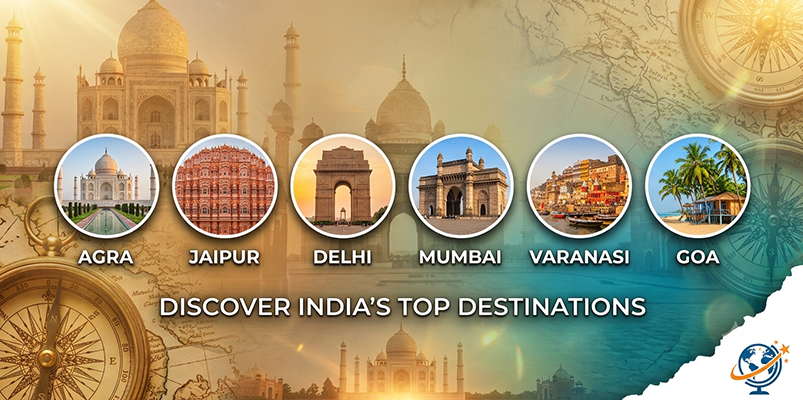
India attracts foreign travelers not through a single identity, but through contrast. Ancient and modern, chaotic and calm, spiritual and celebratory, the country presents experiences that challenge assumptions and invite deeper curiosity. While India offers thousands of destinations, foreign tourists consistently gravitate toward a specific set of cities that provide accessibility, cultural depth, and a sense of narrative continuity. Understanding why these cities attract international travelers reveals how India is perceived, explored, and remembered by the global audience.
Foreign travelers rarely choose cities randomly. Their choices are shaped by history, global visibility, cultural symbolism, and ease of travel. The most visited cities in India by foreign tourists reflect a balance between familiarity and discovery, allowing visitors to experience India’s complexity without feeling lost.
Cities act as cultural gateways. For foreign tourists, cities provide structure, infrastructure, and orientation. Airports, hotels, guides, and transport systems are easier to navigate within cities than in remote regions. More importantly, cities tell stories. Architecture, cuisine, rituals, and daily life converge in urban spaces, offering layered experiences within manageable distances.
Foreign tourists often begin their India journey in cities that offer strong visual identity and global recognition. These cities help travelers build confidence before exploring deeper or less familiar regions.
Delhi stands as the most common entry point for international visitors. Its global connectivity, historical depth, and administrative significance make it a natural starting city. For foreign tourists, Delhi offers a condensed introduction to India’s evolution across centuries.
The city’s layered identity allows travelers to move between eras within a single day. Ancient ruins, Mughal architecture, colonial avenues, and modern neighborhoods coexist, offering a narrative of continuity rather than isolation.This diversity explains why Delhi remains one of the most visited cities in India by foreign tourists.
Explore India’s most visited cities among international travelers with a comfortable private car and experienced driver. From heritage landmarks to cultural hotspots, enjoy a smooth and memorable journey.
Delhi provides foreign travelers with cultural orientation. English-speaking services, varied accommodation options, and established tourism infrastructure help visitors adjust to India’s pace and complexity. Markets, museums, and heritage walks allow exploration without overwhelming intensity.
For first-time visitors, Delhi balances stimulation with familiarity, making it an essential gateway rather than a destination to rush through.
Agra’s global recognition rests primarily on the Taj Mahal, one of the most iconic monuments in the world. For foreign tourists, visiting the Taj Mahal is often a lifelong aspiration shaped by imagery, literature, and symbolism.
However, Agra’s appeal extends beyond a single monument. The city’s Mughal heritage, riverfront gardens, and historic neighborhoods provide context that deepens the Taj Mahal experience. Foreign travelers who spend time beyond the main attraction often discover Agra’s quieter, reflective character.
Agra’s inclusion in international itineraries reflects its symbolic importance. The city offers emotional impact rather than experiential variety. Foreign tourists often describe Agra as a place of contemplation rather than activity.
This emotional resonance secures Agra’s position among the top Indian cities visited by foreign tourists, even for those with limited time.
Jaipur’s popularity among foreign tourists stems from its strong visual identity. Forts, palaces, and planned streets create a cinematic impression that aligns with global perceptions of India’s royal past.
For international visitors, Jaipur offers clarity. Heritage sites are well-preserved, distances are manageable, and cultural experiences are accessible. The city’s markets, architecture, and hospitality reinforce Rajasthan’s image as a land of kings and traditions.
Jaipur introduces Rajasthan in a digestible format. Foreign tourists often feel that Jaipur allows them to understand the region’s essence without logistical complexity. This accessibility explains why Jaipur consistently ranks among the most visited cities in India by foreigners.
The city’s ability to blend heritage with comfort makes it a cornerstone of international travel routes.
Varanasi occupies a unique position in foreign tourism. Unlike cities visited for architecture or leisure, Varanasi attracts travelers seeking philosophical and spiritual understanding. For many foreigners, the city represents India’s metaphysical dimension.
Observing rituals along the river, walking through ancient lanes, and witnessing daily life intertwined with spirituality leave lasting impressions. Varanasi challenges comfort zones while offering profound insight into Indian belief systems.
Foreign visitors often describe Varanasi as intense yet transformative. The city does not attempt to soften its realities. Instead, it presents life and spirituality openly, inviting reflection rather than entertainment.
This authenticity places Varanasi among the top spiritual cities in India for foreign tourists, even though it may not appeal to all travelers.
Mumbai offers foreign tourists a different narrative. As India’s financial and cultural capital, the city reflects modern aspirations, diversity, and global connectivity. Skyscrapers, colonial architecture, film culture, and coastal life coexist within a dynamic urban environment.
For international travelers, Mumbai represents India’s contemporary reality. It provides insight into economic growth, creative industries, and urban resilience.
Mumbai’s global identity makes it approachable for foreign tourists. International dining options, cultural venues, and cosmopolitan neighborhoods offer familiarity within an Indian context.
At the same time, historic sites and local markets reveal layers of history and community life. This balance secures Mumbai’s position among the most visited cities in India by international tourists.
Goa attracts foreign tourists seeking leisure, relaxation, and cultural fusion. Its beaches, Portuguese heritage, and laid-back atmosphere offer contrast to India’s more intense urban centers.
For many international visitors, Goa provides an accessible entry into India. The region’s relaxed pace, global cuisine, and scenic beauty reduce cultural friction while still offering local character.
Goa’s appeal lies in balance. Foreign tourists can engage with Indian culture at their own pace while enjoying familiar comforts. This adaptability makes Goa a long-standing favorite among global travelers.
The state’s consistency ensures its place among the top destinations in India for foreign tourists.
Udaipur attracts foreign travelers drawn to scenic beauty and refined heritage. The city’s lakes, palaces, and calm atmosphere appeal to travelers seeking elegance rather than activity.
For international visitors, Udaipur represents a softer Rajasthan experience. Boat rides, heritage hotels, and artistic traditions create an environment of quiet appreciation.
Udaipur’s emotional tone resonates with travelers seeking reflection and beauty. The city offers space to slow down, making it particularly popular among couples and cultural travelers.This emotional resonance secures Udaipur’s place among the most loved Indian cities by foreign tourists.
Travel across India’s top destinations preferred by international visitors. Enjoy personalized itineraries, private vehicles, and professional drivers for a smooth and comfortable travel experience.
Kolkata attracts a niche segment of foreign tourists interested in intellectual history, literature, and colonial heritage. The city’s cultural institutions, neighborhoods, and artistic legacy appeal to travelers seeking depth rather than spectacle.
Foreign visitors often describe Kolkata as intellectually stimulating, offering insight into India’s social and cultural evolution.
Kolkata’s authenticity and layered identity attract travelers willing to engage deeply. While not universally popular, it remains significant among culturally inclined visitors.
Chennai serves as a gateway to South India for foreign tourists interested in temples, classical arts, and regional culture. The city’s traditional identity offers contrast to North Indian experiences.
For international travelers, Chennai provides orientation into South Indian culture, cuisine, and spirituality.
Foreign tourist preferences are influenced by global narratives, accessibility, and perceived safety. Cities that combine strong identity with logistical ease naturally attract higher visitation.
These patterns explain why certain cities dominate international itineraries while others remain niche destinations.
Airports, roads, hotels, and guides significantly impact foreign tourist choices. Cities with reliable infrastructure create confidence, encouraging longer stays and repeat visits.
This practical reality underpins the popularity of India’s top tourist cities.
Cities that communicate clear stories resonate more strongly with foreign audiences. Whether through monuments, rituals, or lifestyle, storytelling shapes travel decisions.
India’s most visited cities succeed because they offer narratives that foreign tourists can connect with emotionally and intellectually.
Repeat visits indicate satisfaction and connection. Cities that allow deeper exploration beyond surface attractions encourage return travel.
Foreign tourists often revisit India to explore familiar cities more deeply or use them as bases for regional exploration.
Foreign tourists seek clarity, safety, and cultural authenticity. Cities that balance these elements attract consistent international interest.
Recognizing these expectations helps explain travel trends and destination popularity.
The cities most visited by foreign tourists shape India’s international image. Their representation influences perceptions, expectations, and future travel interest.
Understanding this dynamic offers insight into how India is experienced globally.
Our travel Faqs is your ultimate guide to exploring the top destinations in Rajasthan. From insider tips to comprehensive guides, we have everything you need to plan your trip with ease and convenience.
Delhi, Agra, Jaipur, Varanasi, Mumbai, Goa, Udaipur, Kolkata, and Chennai rank among the top cities that draw the highest number of international visitors each year.
Delhi has strong global connectivity, established tourism infrastructure, and a mix of ancient ruins, Mughal monuments, and colonial architecture, making it an easy starting city for first-time visitors.
Most foreign tourists visit Agra to see the Taj Mahal, one of the most recognized monuments in the world, along with other Mughal era sites and riverfront gardens nearby.
Jaipur is popular for its forts, palaces, planned streets, and well preserved heritage sites, giving foreign tourists a clear and manageable introduction to Rajasthan.
Varanasi attracts foreign tourists looking for spiritual and cultural depth. Its riverside rituals, ancient lanes, and daily life along the ghats offer an experience unlike any other Indian city.
Mumbai represents modern India, with skyscrapers, colonial buildings, film culture, and coastal life, giving international travelers insight into the country's urban and economic growth.
Udaipur is known for its lakes, palaces, and calm surroundings, appealing to travelers who want a quieter, more scenic heritage experience, especially couples and cultural travelers.
Global recognition, safety, infrastructure like airports and hotels, and strong cultural storytelling all influence why certain Indian cities attract more foreign visitors than others.
Goa offers beaches, Portuguese heritage, and a relaxed pace of travel, making it an easy and comfortable entry point into Indian culture for foreign visitors.
Chennai offers access to South Indian temples, classical arts, and regional traditions, giving foreign travelers an introduction to a culture distinct from North India.
Yes, many international travelers combine cities like Delhi, Agra, and Jaipur into a single itinerary, often known as the Golden Triangle, and extend it further to Udaipur or Varanasi based on interest.
Kolkata attracts travelers interested in literature, colonial history, and intellectual culture. It is popular among visitors who prefer depth over typical sightseeing.