The Taj Mahal isn’t just a monument - it’s a moment. A moment suspended in time, built with love and layered in marble. Whether you’re an avid history lover, a romantic soul or simply a traveler seeking India’s finest architecture, the Taj Mahal is a must-see. And while there are many ways to reach Agra, a Taj Mahal tour by private car offers the most personalized, comfortable and immersive way to experience this iconic destination.
Unlike group tours or bus rides that come with rigid timetables and crowded itineraries, a private car tour in Agra gives you freedom - freedom to stop for a cup of chai, pause for photographs in mustard fields or simply drive in silence as you approach the city that holds one of the Seven Wonders of the Modern World. This guide walks you through what to expect, how to plan, when to go and why this form of travel might just be the best decision you make on your journey through India.
Traveling by private car brings the journey as close to luxury as it gets without losing the authenticity of India. Imagine being picked up at your hotel just before dawn, with a courteous, English-speaking driver waiting outside. You step into an air-conditioned vehicle stocked with bottled water and snacks, and you’re on your way to Agra along the Yamuna Expressway, one of the smoothest highways in the country.
There’s a certain charm in not having to stick to someone else’s clock. Want to stop along the way for a cup of hot tea at a roadside dhaba? Curious about those sugarcane fields you saw out the window? With a private car, you can. There's no pressure to rush through your experience or skip places of interest. You are in control of your time, your pace, and your journey.
Moreover, a private car tour often allows you to build a deeper connection with your driver, who might share stories of his own visits to the Taj or point out things you might not notice otherwise. For couples, families with children, or solo travelers looking for peace of mind, the safety and flexibility offered by a private tour is unmatched.
The key to a smooth trip lies in good planning. Once you’ve decided on the private car route, book your tour a few days in advance to ensure availability, especially during peak tourist months. Many local operators offer full-day return trips from Delhi or Jaipur, complete with licensed guides, monument entry tickets, and even buffet lunch stops at reputable hotels in Agra.
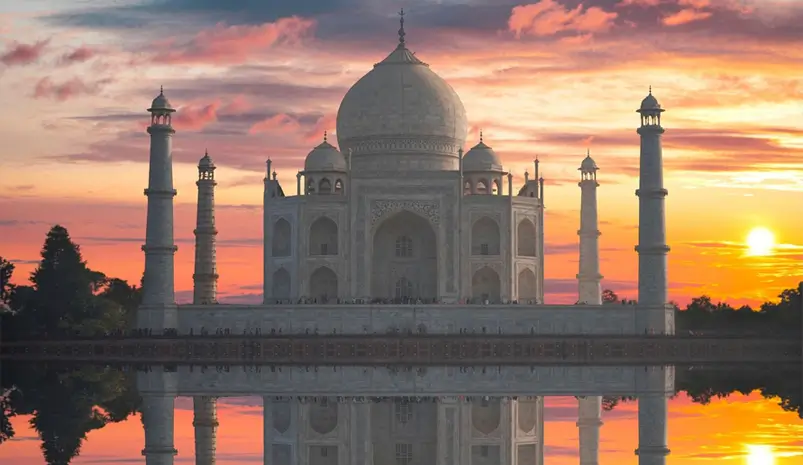
Timing is everything. The Taj Mahal is closed to visitors on Fridays, so plan accordingly. Weekends tend to be busier with domestic tourists, making weekdays more peaceful. If possible, aim for a sunrise entry. Watching the first rays of sunlight reflect off the pristine white marble is a spiritual experience that photos can hardly capture.
Don’t forget to book your Taj Mahal tickets online through the official Archaeological Survey of India (ASI) portal. This not only saves you time at the gate but also allows you to skip the general queue. Carry a valid ID (passport or driving license) for entry verification, and consider opting for a ticket that includes the mausoleum interior access.
Weather plays a big role in shaping your Taj Mahal experience. The best time to visit Taj Mahal is between October and March, when the air is crisp, the skies are clear, and the gardens are lush with green. During summer (April to June), Agra can be unbearably hot, with temperatures soaring above 40°C (104°F), making it difficult to enjoy outdoor sightseeing.
The sunrise slot is highly recommended - not just for the magical lighting but also because the monument is relatively empty at that hour. You’ll find fewer tour groups, quieter surroundings, and the opportunity to take photos that feel personal rather than postcard-perfect.
A well-paced private car tour begins early in the morning, includes a relaxed walk through the Taj Mahal complex, and offers flexibility to add Agra Fort, Mehtab Bagh, or a local handicrafts market into your day. With a return trip in the evening, it makes for a fulfilling day without the exhaustion of being herded through a checklist.
The road from Delhi or Jaipur to Agra gives you a glimpse into India's dual personality, its ancient soul and modern ambitions. The Yamuna Expressway is a world-class six-lane highway, offering a smooth and safe journey. You’ll cruise past small villages, farm fields, and the occasional herd of buffaloes crossing the road. The changing scenery between mustard-yellow fields, old temples, and roadside fruit sellers adds color to your journey.
A private car ride allows you to experience these transitions with intimacy. Your driver might stop at a clean rest area for breakfast or take you to a hidden spot for panoramic views before reaching the monument. And if you're curious, many drivers will be happy to explain cultural tidbits, local superstitions, or even share their favorite memory of the Taj.
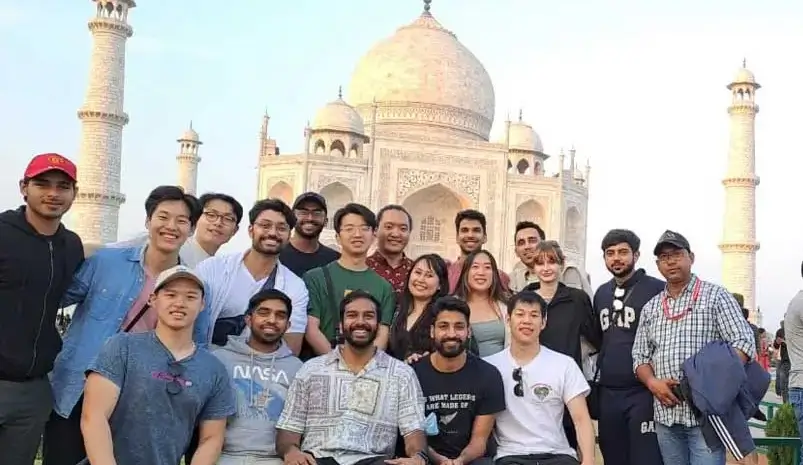
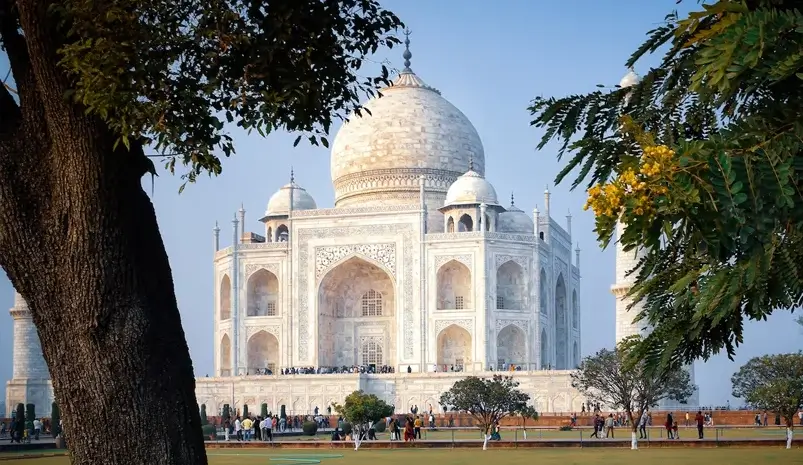
Your car will drop you at the parking zone, from where electric shuttles or rickshaws take you to the monument's entry gates. Of the three main gates East, West, and South the East Gate is usually the least crowded and most favored by private tour operators. The moment you step through the red sandstone arch and catch your first full glimpse of the Taj Mahal, it feels like time pauses. The symmetry, the scale, and the sheer perfection of design can overwhelm even seasoned travelers. It is no wonder that Shah Jahan built it as a symbol of eternal love for his wife Mumtaz Mahal.
While exploring, keep in mind that certain rules are strictly enforced. No food, large bags, tripods, or drone cameras are allowed inside. Security screening is thorough. Photography is permitted in most areas, but the inner sanctum where the cenotaphs lie is to be experienced quietly. Wear or carry socks as shoes must be removed or covered when entering the white marble platform. Dress modestly, especially if you plan to visit the mosque inside the complex. Long sleeves and pants or traditional attire are appreciated, and women may want to carry a scarf.
Having a licensed guide can turn your visit into a living storybook. A good guide doesn't just repeat facts—they recreate scenes from Mughal history, point out architectural marvels invisible to the untrained eye, and even advise you on the best angles for photos. However, some travelers prefer the solitude of a self-guided visit. With digital audio guides and mobile apps now available, you can still receive historical insights without being part of a group. This gives you more time to reflect, take photos, or simply sit and admire the monument in silence. Many private car operators offer packages with or without guides, depending on your preference. Just make sure to confirm this when booking.
Agra is bustling and beautiful but requires mindfulness when it comes to hygiene and cultural sensitivity. While near the monument, refrain from public displays of affection or loud behavior - this is a place of reverence and national pride.
Stick to bottled water from reputable brands, and avoid street food unless recommended by your guide or driver. Many travelers find themselves tempted by the sweet-smelling snacks outside the gates, but it’s better to wait for a trusted restaurant in town. The popular local delicacy Petha (a soft candy made from ash gourd) is best bought from an established sweet shop.
When taking photos, be polite and avoid pushing into others’ frames. Don’t offer money to guards or caretakers for photo privileges—it’s frowned upon and unnecessary.
Pack light. A small backpack with essentials is enough. Carry your ID, phone, camera, a wide-brimmed hat, sunglasses, sunscreen, and a water bottle. Women may find a scarf useful for entering the mosque. Wear comfortable shoes, as the walking distance inside the complex can be significant and marble floors may get hot by midday. During monsoon months, a compact umbrella or rain poncho is a good idea. Hand sanitizers and tissues are handy at rest stops or while dining.
In a country of over a billion people, finding solitude can be challenging. That’s why the Taj Mahal by private car becomes such a powerful experience—it gives you room to breathe, reflect, and admire.
Instead of being rushed past the monument with a large group, you can linger beneath the central dome, trace the floral inlays with your eyes, or sit in the gardens and watch the Yamuna River flow behind the mausoleum. The journey becomes yours, not one scripted for the masses.
And at the end of the day, when you’re tired but fulfilled, your car will be waiting. No last-minute cab haggling, no jostling for seats on a crowded bus. Just a calm ride home with the Taj still glowing in your mind.
A visit to the Taj Mahal is more than sightseeing—it’s a pilgrimage. And choosing a private car tour is perhaps the best way to honor that journey. From the serenity of the early morning highway to the golden glow of the marble mausoleum, every part of the experience feels intentional and deeply personal. Whether you’re traveling solo, with a partner, or with family, consider gifting yourself this more relaxed, immersive version of the trip. You’ll return not just with photos but with a story—and a sense that for one day, the world truly stood still in front of something perfect.
Agra is famous for its marble inlay work, leather goods, petha sweets, and miniature Taj replicas. While there are many shops near the monument, some can be overpriced or focused on tourists. Ask your driver or guide to take you to a government emporium or a well-reviewed local crafts outlet for better quality and fair prices.
Yes, especially if you're traveling via the Yamuna Expressway from Delhi. The route has multiple rest areas with clean restrooms, snack counters, and coffee stops. Your private driver will likely be familiar with the best ones, and you can always request a break if needed. It’s one of the perks of private travel complete flexibility.
A full-day private car tour from Delhi to the Taj Mahal costs between ₹5,000 to ₹12,000, depending on the type of vehicle, inclusions like guide services, monument tickets, tolls, meals, and whether you’re booking through a luxury provider or a local operator. It's always a good idea to check whether your package is all-inclusive to avoid hidden charges later.
No, the Taj Mahal is closed every Friday for regular prayers held at the mosque inside the complex. The rest of the week, it is open from sunrise to sunset, usually starting around 6:00 AM and closing by 6:30 PM.
Sunrise is widely considered the best time to visit the Taj Mahal. The early morning light adds a golden-pink hue to the white marble, and the monument is much less crowded at that hour. Late afternoon is also beautiful, especially if you prefer warmer tones and sunset photography. Both times offer soft lighting and cooler temperatures compared to midday.
Yes, and it’s highly recommended. You can book your tickets in advance through the official Archaeological Survey of India (ASI) website or other approved platforms. Booking online helps you skip long lines and ensures entry on busy days. Be sure to carry a printed or digital copy along with your ID for verification at the gate.
While personal cameras and smartphones are welcome, tripods, drones, large lenses, and video equipment are prohibited. This is to maintain crowd flow and avoid security concerns. If you're a professional photographer, you’ll need to obtain special permission from the authorities in advance. Drones are not allowed anywhere near the monument.
Its not mandatory, but having a guide adds a lot of value to your visit. Licensed guides can share the monuments intricate history, point out hidden design elements, and even help you take better photos. However, if you prefer exploring at your own pace, self-guided mobile apps are a great alternative.
Modest and comfortable clothing is best. Avoid revealing outfits out of respect for local customs, especially if you plan to enter the mosque within the complex. Light, breathable fabrics work well year-round. Don't forget sunglasses, a hat, and sunscreen for sunny days, and a scarf or shawl is useful for women in religious areas.
Only sealed bottled water is allowed inside. Food, snacks, and even chewing gum are prohibited. Security checks are strict, so it's better to avoid carrying anything that could be flagged. If you need a quick bite, have it before entering the complex or wait until after your tour to enjoy Agra's local cuisine.
The East Gate is usually the least crowded, especially in the early morning. It's popular with foreign tourists and is well-managed with electric shuttle service from the parking area. The West Gate is the busiest, and the South Gate is primarily used by local visitors and opens a bit later than the others.
Most visitors spend 2 to 3 hours inside the complex. This includes walking through the main gate, touring the mausoleum, relaxing in the gardens, and taking photos. If youre including nearby sites like Agra Fort or Mehtab Bagh in your private car tour, plan for a full 8 &10 hour day including travel time.
Absolutely. The Taj Mahal and Agra Fort are just a 10-minute drive apart. Most private car tours offer this combination, and it's a great way to understand the Mughal empire more fully. While the Taj reflects love and beauty, Agra Fort speaks of strategy, power, and history. Both are UNESCO World Heritage Sites worth seeing together.
Yes, private car tours are generally very safe for solo travelers, including women. Booking with a reputable travel agency or tour provider ensures vetted drivers, clean vehicles, and professional service. Many female travelers report feeling more comfortable and secure in a private vehicle compared to public transport or shared group tours.
The most pleasant time to visit is between October and March. During these months, the weather is cool, skies are usually clear, and outdoor sightseeing is more enjoyable. Avoid peak summer months (April to June), when temperatures can exceed 45°C (113°F), making it uncomfortable to walk around the marble complex.