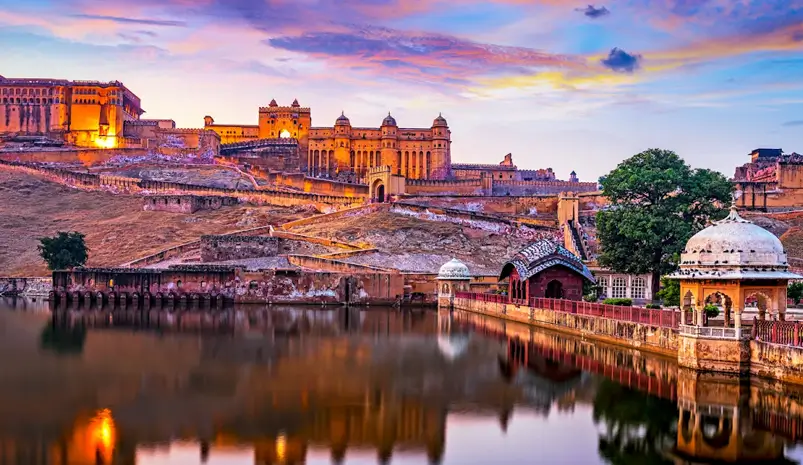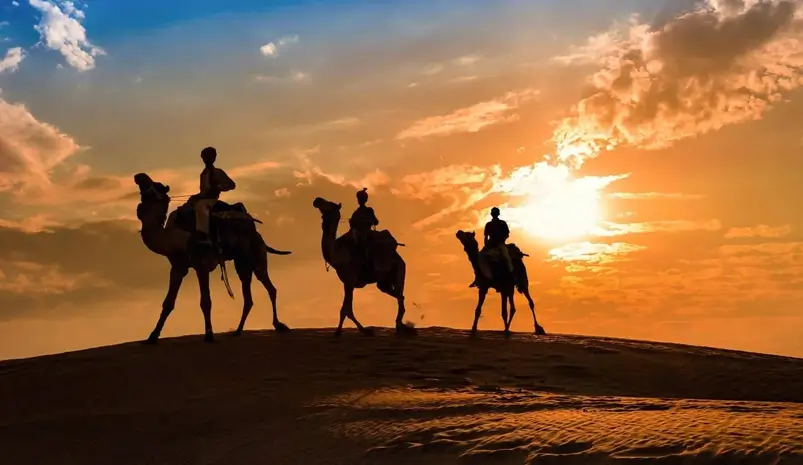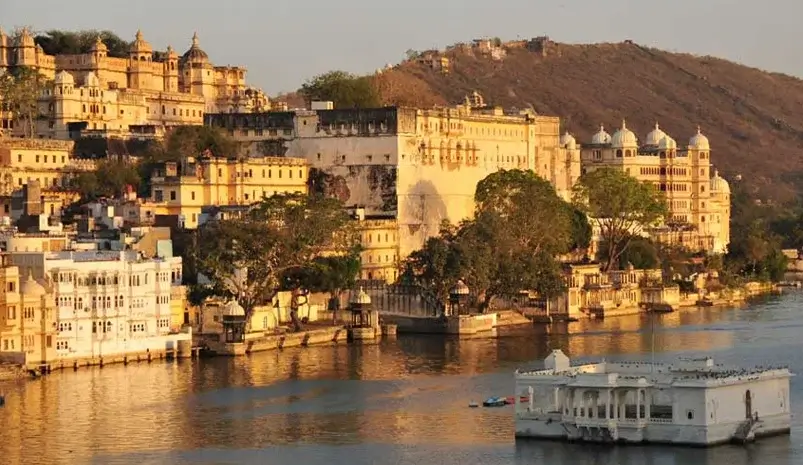
The golden deserts and majestic forts of Rajasthan have long captured the imagination of travelers, but beyond these iconic landscapes lies another world altogether one where striped shadows move through dry grasslands, where the predawn air rings with the calls of rare birds and where luxury tented camps stand as oases in the wilderness. This is Rajasthan's wild side, where nature writes its own epic tales of survival and beauty.
For those willing to venture off the beaten path, the state offers some of India's most extraordinary wildlife encounters. From the legendary tiger trails of Ranthambore to the avian paradise of Bharatpur, these protected areas tell a compelling story of conservation success against all odds. What makes Rajasthan's wilderness truly special is how seamlessly it intertwines with human history medieval watchtowers now serve as wildlife observation points and ancient hunting grounds have transformed into thriving ecosystems.
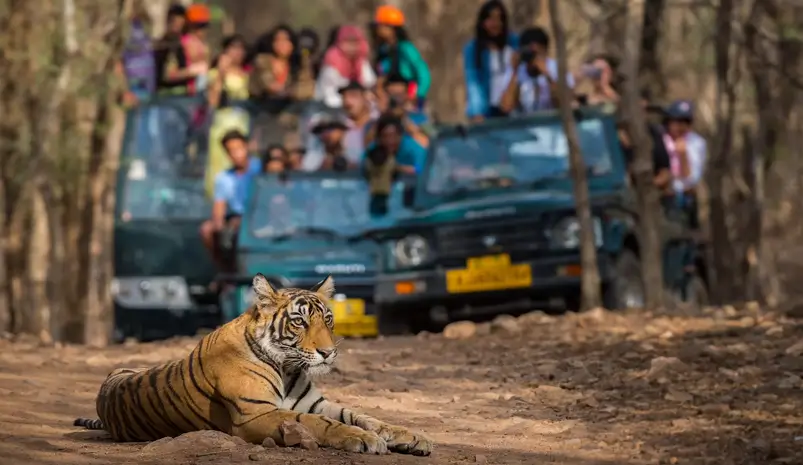
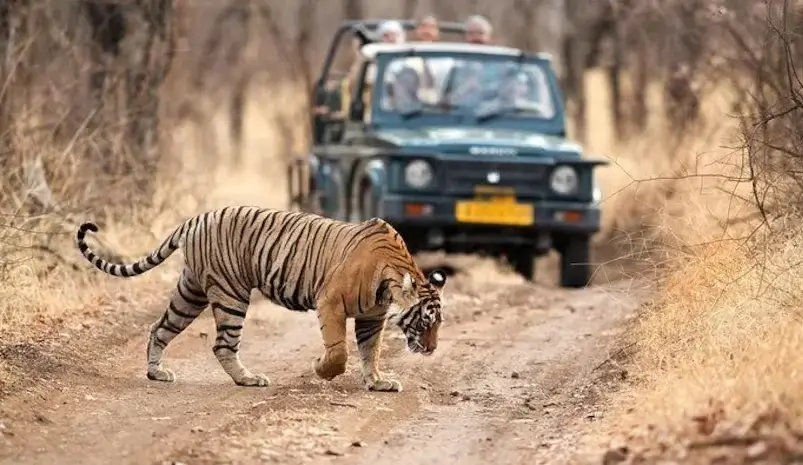
There are few wildlife places in India where nature and history coexist as dramatically as in Ranthambore National Park. The ruins of a 10th-century fort, perched atop a hill, overlook forests where Bengal tigers now reign supreme. This unique juxtaposition creates safari experiences unlike any other imagine tracking paw prints along ancient pathways or spotting a tigress and her cubs resting near a Mughal-era pavilion.
Ranthambore's success as a tiger conservation area is particularly remarkable given its origins as a royal hunting reserve. The park's transformation from a playground for maharajas to a protected sanctuary exemplifies how wildlife tourism in Ranthambore can drive conservation efforts. Today, its dry deciduous forests and network of lakes support not just tigers but also leopards, sloth bears, and over 300 species of birds. The park's topography, with its open scrub forest and rocky outcrops, makes it one of the best places in India to observe tigers in their natural habitat.
Morning safaris here begin in the crisp air of dawn, when the golden light transforms the landscape into something magical. As the jeep navigates through narrow forest trails, every turn holds potential a sambar deer's alarm call might reveal a hidden predator, or the distant splash of water could lead to a tiger cooling itself in a lake. The afternoon drives, though warmer, often yield sightings of leopards stretching on tree branches or marsh crocodiles basking on lake shores.
Sariska Tiger Reserve's tale is one of loss and redemption - a conservation story that captures both the fragility and resilience of nature. In the early 2000s, this beautiful wilderness in the Aravalli hills became infamous when poachers wiped out its entire tiger population. The subsequent reintroduction program, which involved relocating tigers from Ranthambore, became a landmark in Indian wildlife history.
Today, Sariska's tigers roam freely again, their presence a testament to what determined conservation efforts can achieve. The reserve's mix of dry deciduous forests, grasslands and rocky hills creates diverse habitats that support not just tigers but also leopards, striped hyenas, and golden jackals. Ancient ruins scattered throughout the park, like the atmospheric Kankwari Fort where Mughal emperor Aurangzeb once imprisoned his brother, add layers of history to the wilderness experience.
What makes Sariska special for visitors is its more intimate atmosphere compared to Ranthambore. With fewer vehicles on its trails, safaris here feel more personal, more dip. The early morning drives, when the forest first stirs to life are particularly magical the air carries the scent of wild basil, langurs call from the treetops, and if you're fortunate, you might hear the resonant call of a peacock signaling the presence of a predator nearby.
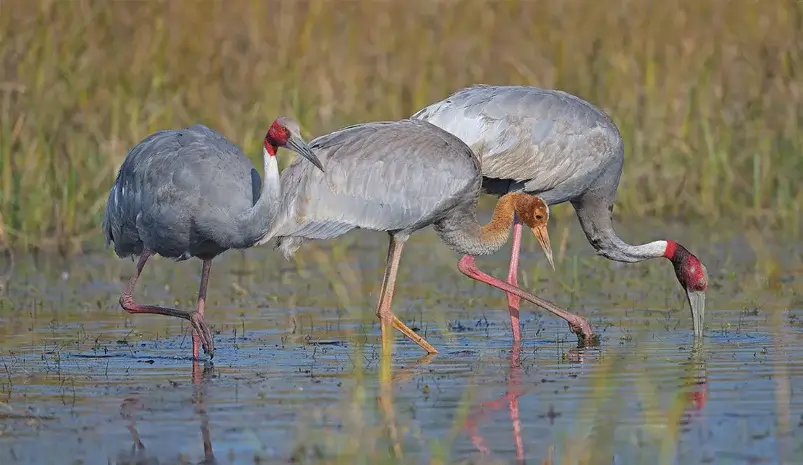
Keoladeo Ghana National Park, better known as Bharatpur Bird Sanctuary, offers a completely different but equally captivating wilderness experience. This UNESCO World Heritage Site transforms each winter into one of Asia's most spectacular avian spectacles. From the elegant sarus crane - the world's tallest flying bird - to flocks of vibrant painted storks, the park becomes a living tapestry of color and movement.
The magic of Bharatpur lies in its accessibility. Unlike most national parks where visitors remain in vehicles, here you can explore on foot, by bicycle, or in silent boats that glide through the wetlands. This intimacy with nature creates moments that stay with you - watching a purple heron strike at fish with lightning speed, or hearing the dawn chorus build as sunlight filters through the trees.
For photographers, the park offers endless opportunities. The golden light of early morning illuminates flocks of ducks taking flight, while late afternoons might reveal a stealthy jungle cat hunting along the water's edge. Even in summer, when migratory birds have departed, the resident species and the park's tranquil beauty make it worth visiting.
While Ranthambore and Sariska dominate wildlife itineraries, Rajasthan holds several lesser-known gems that reward the curious traveler. The granite hills of Jawai Bandh, for instance, shelter one of India's most remarkable leopard populations. Unlike their shy counterparts elsewhere, these big cats have adapted to live alongside local communities, creating unique opportunities for observation.
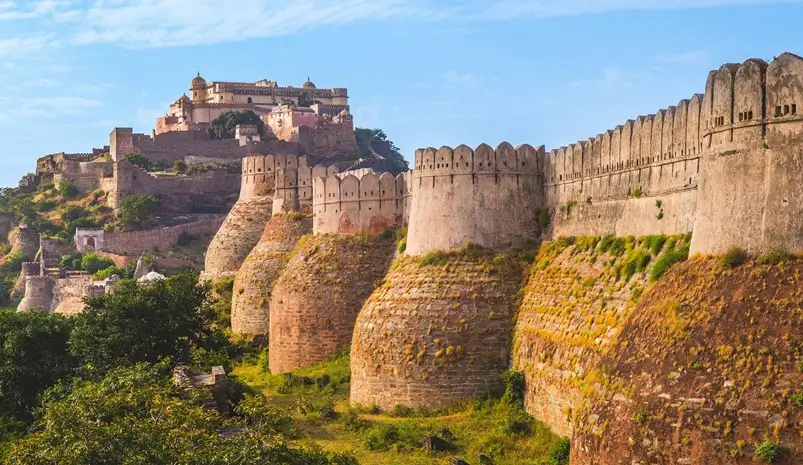
Further south, the newly established Mukundara Hills Tiger Reserve shows promise as an emerging wildlife destination. Its teak forests and grasslands already support tigers relocated from Ranthambore, along with healthy populations of leopards, sloth bears, and Indian wolves. Kumbhalgarh Wildlife Sanctuary, with its dramatic fortress scenery, protects another population of the increasingly rare Indian wolf, along with leopards and over 200 bird species.
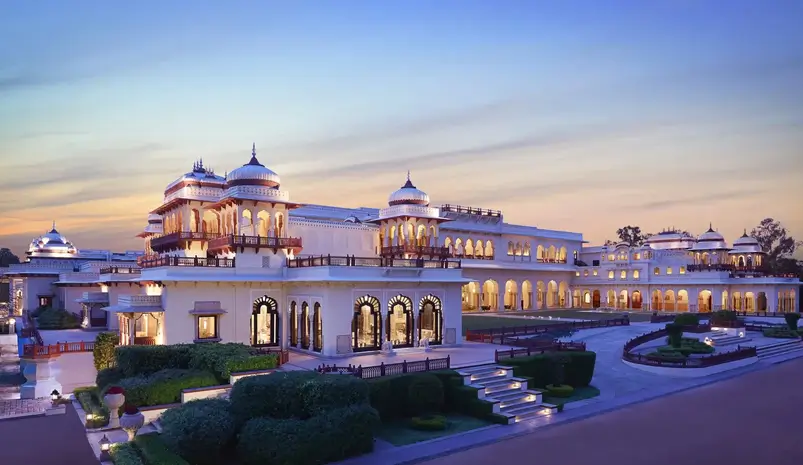
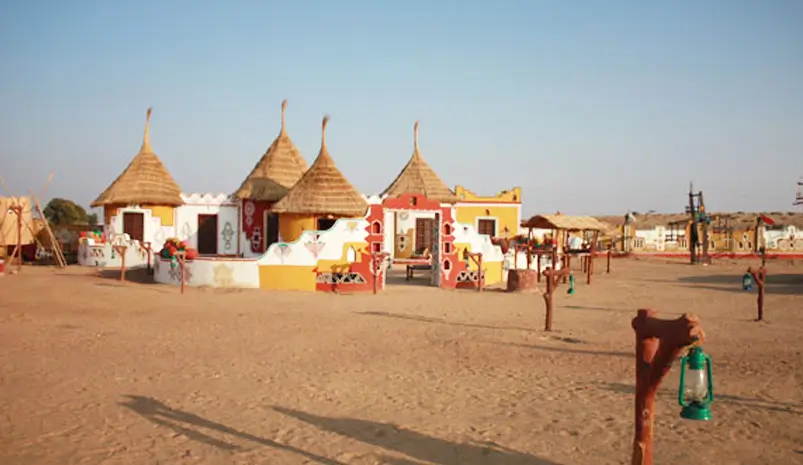
Rajasthan has perfected the art of blending raw nature with refined hospitality. Luxury tented camps in Rajasthan like Suján Sher Bagh transport guests to the golden age of safaris, with their elegant campaign-style tents and impeccable service. What sets these properties apart is their commitment to authentic experiences - expert naturalists share their deep knowledge of the forest, meals feature local ingredients prepared with care, and every element is designed to enhance rather than detract from the wilderness outside.
For those seeking ultimate privacy, properties like Aman-i-Khas offer exclusive safari experiences with no other vehicles in sight. Their luxury tents, inspired by Mughal hunting camps, feature private plunge pools and outdoor showers under the stars. Evenings here might include dining by lantern light as the sounds of the forest provide nature's soundtrack.
Near Jaipur, several nature retreats provide perfect complements to the safari experience. Chhatra Sagar's luxury tents overlook a century-old reservoir that attracts hundreds of birds at sunset. Amanbagh, set amidst orchards near Sariska, combines Ayurvedic wellness with wilderness access. These properties demonstrate Rajasthan's unique ability to offer both thrilling adventure and deep relaxation.
As wildlife tourism in Rajasthan grows responsible practices become increasingly important. Choosing eco-sensitive lodges that support local communities, maintaining respectful distances from animals, and following park guidelines all help ensure these wild spaces remain vibrant. Many camps now employ naturalists from nearby villages, creating economic incentives for conservation.
The most memorable safari moments often come when we surrender to nature's rhythms—waiting patiently at a waterhole as the afternoon heat builds, or sitting silently as a tiger emerges from the forest. These experiences remind us of our place in the natural world and the importance of protecting these wild spaces.
Rajasthan's wilderness areas offer more than just animal sightings—they provide connections to something ancient and essential. Whether it's tracking a tiger's paw prints in Ranthambore, watching a leopard descend Jawai's granite hills at dusk, or hearing the dawn chorus build at Bharatpur, these experiences stay with travelers long after they return home. In a world where wild spaces increasingly disappear, Rajasthan's commitment to conservation gives hope—and unforgettable adventures.
Choosing eco-sensitive lodges that employ local communities, donating to reputable conservation organizations, and spreading awareness about responsible tourism practices all make meaningful contributions to protecting Rajasthan's wild heritage.
Beyond the "big ticket" animals, Rajasthan's parks offer surprises—Indian foxes hunting at dusk, monitor lizards crossing paths, or rare birds like the crested serpent eagle. Night drives (where permitted) reveal a different world of jungle cats, civets, and nightjars.
From being hunting grounds to becoming protected areas, Rajasthan's parks now represent conservation success stories. Sariska's tiger reintroduction proved such programs can work, while Ranthambore demonstrates how tourism revenue can fund protection efforts. Challenges remain, but the trend is positive.
During summer months, hydration and sun protection are crucial. Malaria risk is minimal, but insect repellent is advisable. Those with respiratory issues should be prepared for dust during dry season safaris. Most luxury camps have medical support available.
Absolutely. Most parks are within easy reach of Rajasthan's cultural highlights—Ranthambore near Jaipur, Sariska near Alwar's palaces, and Bharatpur close to Agra's Taj Mahal. Many luxury camps even offer curated experiences combining safaris with heritage visits.
Ranthambore offers some of India's best tiger viewing due to its open landscapes. While it lacks the dense forests of central India parks, its combination of wildlife, history, and luxury accommodations creates a unique experience unmatched elsewhere.
A DSLR or mirrorless camera with a 300-400mm lens is ideal for wildlife. For birds at Bharatpur, longer lenses (500-600mm) are beneficial. Don't forget extra batteries, memory cards, and protective gear for your equipment against dust.
Responsible tourism actually supports conservation by creating economic value for protecting habitats. However, visitors should choose operators who follow ethical practices—maintaining proper distances from animals, limiting vehicle numbers, and employing local guides.
Winter months (November to February) offer pleasant temperatures and excellent birdwatching, particularly at Bharatpur. For tiger sightings, the hot summer months (April to June) are ideal as animals congregate near water sources, though temperatures can be extreme.
Serious wildlife enthusiasts should plan for at least four to six safari drives across different times of day. Tigers are most active in early mornings and late afternoons, while midday drives can reveal leopards resting in trees and various bird species.